
Book Appointment Now
IPTV Reseller Renewal Calendar: A Practical 2026 Guide
An IPTV Reseller Renewal Calendar is a dated record of every customer’s expiry, showing exactly who needs a message this week rather than leaving you to notice once a line has already lapsed. Most resellers lose renewals not because their service is bad, but because nobody flagged the date until the customer had already found somewhere else to watch. A working calendar fixes that by turning renewals into a routine task instead of a memory test.
What an IPTV Reseller Renewal Calendar actually tracks
At its simplest, this is a list of every active customer line paired with its expiry date, sorted so the nearest dates sit at the top. Some resellers keep it in a spreadsheet, some inside their panel dashboard if it supports expiry sorting, and a few use a basic calendar app with one entry per customer. The format matters less than the habit of checking it on a fixed schedule.
A useful calendar usually holds more than just the date. Customer name or reference, package type, price paid last time, preferred contact method and whether they have renewed on time before all help you decide how and when to reach out. A customer who always renews a week early needs a different message than one who has let a line lapse twice already.
Building your calendar in four steps
Start by pulling every active line from your IPTV reseller panel and noting its expiry date. If you are managing more than a handful of customers, do this in a spreadsheet rather than trying to hold it in your head, because memory is exactly where renewal tracking usually breaks down.
Second, sort by date and mark anything expiring within seven days. This becomes your working list for the week rather than something you glance at once a month.
Third, decide your contact window. Most resellers message customers three to five days before expiry, early enough to catch people before they’ve mentally moved on, but not so early that the reminder gets forgotten again. A second message on the expiry day itself catches anyone who missed the first.
Fourth, log the outcome. Renewed, ignored, cancelled, or asked for a different package. This turns your calendar into a record you can learn from, not just a to-do list you clear and forget.
Pro tip: Colour-code rows by urgency (overdue, due this week, due next week) so a glance at the sheet tells you where to start, without reading every line.
Reading the renewal curve across the year
Renewal volume rarely stays flat. Sport-heavy periods in autumn and winter tend to bring a wave of new sign-ups, which means a matching wave of renewals lands roughly a month or a year later depending on the package length. Summer often brings a quieter stretch as viewing habits change, and that’s usually when cancellations cluster too, since customers reassess subscriptions they signed up for during a specific season.
Knowing this in advance means you’re not caught out by a sudden cluster of expiries in the same week, and you can plan your own credit purchases around it rather than scrambling to top up mid-surge. Resellers who track this pattern for even one full year tend to get noticeably better at forecasting how many credits to hold in reserve.

Where renewal calendars usually fail
| Mistake | Better approach |
|---|---|
| Checking expiries only when a customer complains | Review the list on a fixed day each week |
| One generic reminder message for everyone | Vary tone for first-time versus repeat late renewers |
| No record of who was contacted | Log every message sent and the response |
| Treating credits and renewals as separate jobs | Buy credits based on the upcoming renewal wave |
The most common failure isn’t a missing tool, it’s an inconsistent one. A spreadsheet checked religiously every Monday beats an elaborate dashboard nobody opens for three weeks.
Sub-reseller renewal considerations
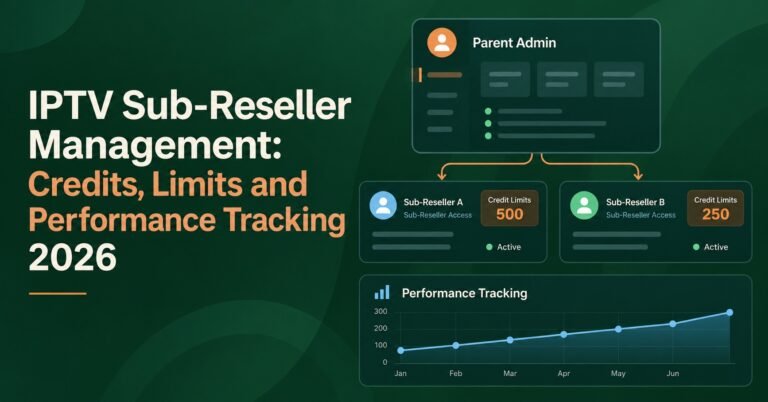
If you supply credits to sub-resellers rather than only selling direct lines, your calendar needs a second layer. Track when each sub-reseller’s own credit balance is likely to run low, based on how quickly they’ve been drawing it down, rather than waiting for them to message you asking for more. A sub-reseller who runs out of credits mid-week can’t renew their own customers, and that delay reflects back on you even though the fault sits one step removed.
Pro tip: Ask sub-resellers to share their own renewal dates with you monthly. It takes them two minutes and saves you from guessing their restocking pattern.

Before any of this matters, it helps to understand the basic economics behind what you’re tracking. Reading through how IPTV Panel reseller profit margins actually work makes it clearer why chasing a renewal is almost always worth more than chasing a new sale, since the credit cost is already familiar and there’s no trial period to negotiate.
Renewal Calendar Checklist
- List every active customer line with its current expiry date
- Sort the list so the nearest dates appear first
- Set a fixed day each week to review upcoming expiries
- Message customers three to five days before their date
- Send a second reminder on the expiry day for anyone who hasn’t replied
- Record the outcome of every renewal attempt
- Check sub-reseller credit balances against their typical monthly usage
- Adjust your own credit purchases ahead of known seasonal surges
Frequently Asked Questions
How far in advance should I contact customers about renewal?
Three to five days before expiry works for most resellers, giving enough notice without the reminder being forgotten by the time the date arrives. A same-day follow-up catches anyone who missed the first message.
What’s the simplest way to start if I have no system at all?
A basic spreadsheet with name, expiry date and contact method is enough to begin. You can add complexity later, but starting today with something simple beats waiting for a perfect tool.
Should I offer a discount for early renewal?
Some resellers do, and it can smooth out the workload by encouraging customers to renew ahead of the deadline rather than all clustering on the exact date. It’s optional rather than necessary, and worth testing on a small group first.
How do I know how many credits to keep in reserve?
Track your renewal volume for a full seasonal cycle first. Once you can see which months bring surges, you can hold a buffer of credits ahead of those periods instead of topping up under pressure.
What happens if a customer’s line expires before I contact them?
The line simply stops working until it’s renewed. It’s not permanently lost, but every day of downtime increases the chance the customer looks elsewhere, which is exactly why the calendar exists in the first place.
Reviewing the basics in our guide to IPTV panel reseller requirements is a useful next step if you’re still setting up your account structure alongside your renewal process.
An IPTV Reseller Renewal Calendar only works if it’s checked on a schedule, not consulted when a customer has already gone quiet. Start with a simple sorted list, set one fixed review day each week, and log every outcome so the pattern becomes visible over time. Once you can see your own seasonal renewal curve, buying credits and planning contact messages stops being guesswork and starts being routine.


[…] point where total demand across the business justifies a bulk purchase. A structured approach to IPTV Reseller Panel Credit Forecasting works the same way whether it covers one panel or five, provided the reseller […]