Book Appointment Now
White Label IPTV Reseller Panel UK: What You Actually Get 2026
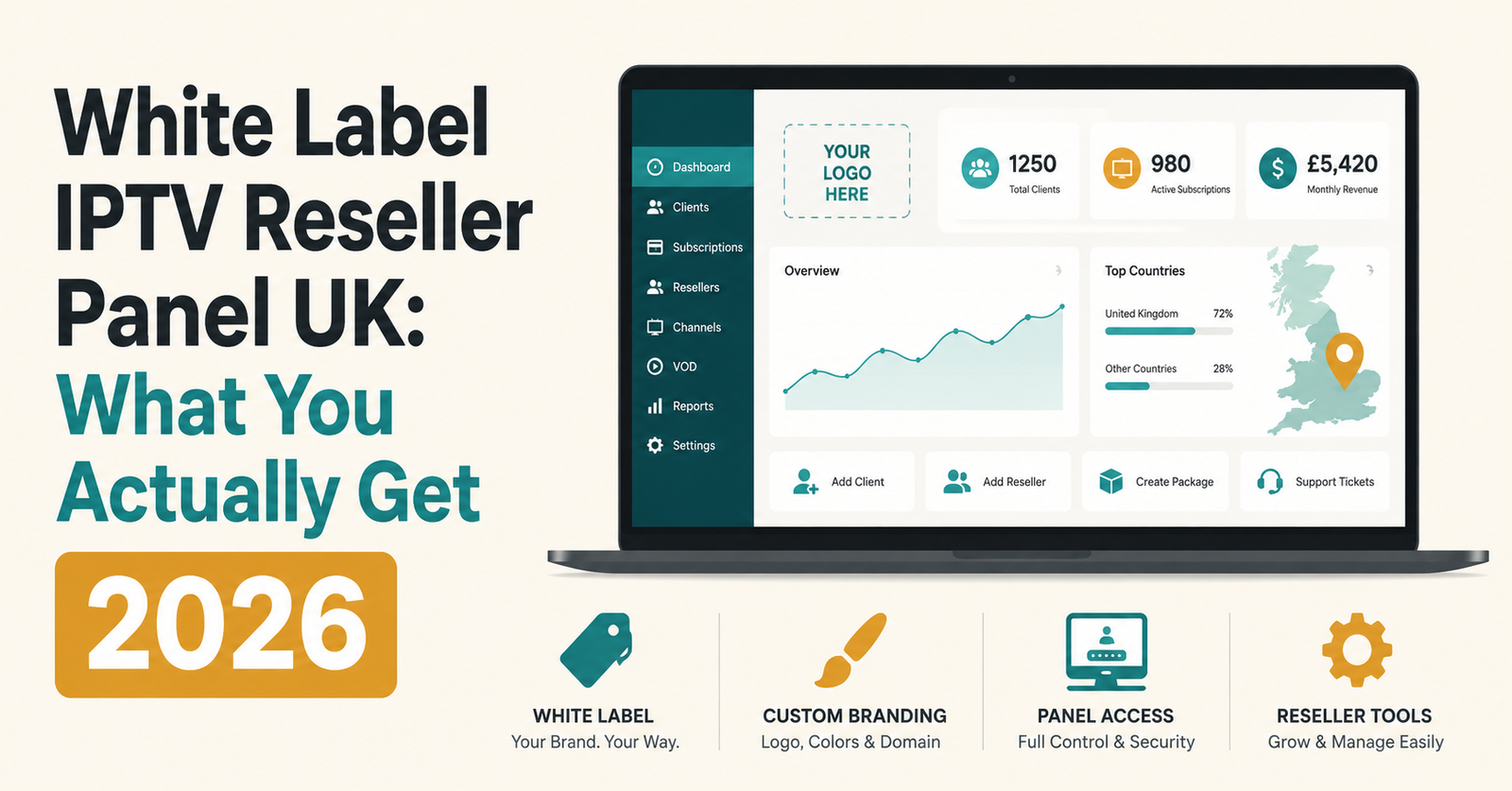
A White Label IPTV Reseller Panel UK setup lets you sell IPTV subscriptions under your own brand while someone else runs the servers and infrastructure behind it. Your customers see your name on the app, your domain in their browser, and no trace of the company actually supplying the streams. That distinction matters more than most new resellers realise, because it changes how customers perceive you, how much trust you can build, and whether you can eventually sell to sub-resellers rather than just end viewers.
What a White Label IPTV Reseller Panel UK Actually Gives You
Strip away the marketing language and white label simply means rebranding. The underlying service, the servers, the channel lists, the support infrastructure, none of that changes. What changes is the layer your customer sees. Instead of downloading an app with your provider’s name on it, they download one with your business name on it. Instead of logging into a generic panel address, they log into a domain you control.
This matters because IPTV Panel resellers compete on trust as much as price. A customer who sees an unfamiliar third-party name mid-transaction starts asking questions you don’t want to answer. A customer who only ever sees your brand has no reason to look elsewhere, and no easy way to cut you out and go direct to your supplier later.
Most panels in the UK market offer white label as an add-on rather than a default. It typically covers a custom app name, sometimes a custom domain for the panel login, and occasionally a fully rebranded customer-facing website. Not every panel offers all three, so it’s worth confirming exactly which parts of the branding are included before you commit.
How the Branding Actually Works Behind the Scenes
Nothing about the streaming infrastructure changes when you go white label. You’re still buying credits, still creating customer lines through the same dashboard functions, still relying on the same servers for uptime and channel stability. White label sits entirely on top, changing what the customer-facing layer looks like without touching how the backend operates.
Most providers handle the rebranding process manually rather than through a self-serve toggle. You request it, supply your business name and any branding assets you want used, and the provider configures the app naming and domain on their end. Turnaround varies, but a few days is typical rather than instant activation, since custom app builds and domain configuration usually need manual setup.
Custom domains tend to sit behind a credit threshold rather than being available from day one. This is common practice across UK panels: white label branding proves the reseller is operating at meaningful volume before the provider commits engineering time to a fully separate domain and app listing.
Pro tip: Ask your provider exactly what “white label” includes before you pay for it. Some panels only rebrand the app name and still show their own domain in the panel login URL, which undermines the point if a customer ever looks closely.
What to Check Before You Commit to a Panel
New resellers often focus entirely on the credit price and skip the questions that actually determine whether the branding holds up under real use.
Ask whether the app name change applies retroactively to existing customer lines or only to new ones created after the switch. Ask whether the custom domain, if offered, is a genuinely separate address or a subdomain that still reveals the parent provider. Ask how long rebranding realistically takes, since a vague answer here usually means it hasn’t been tested at scale. And ask what happens to your branding if you ever need to migrate customers to a different provider, since a panel that owns your domain configuration can make that transition harder than it needs to be.
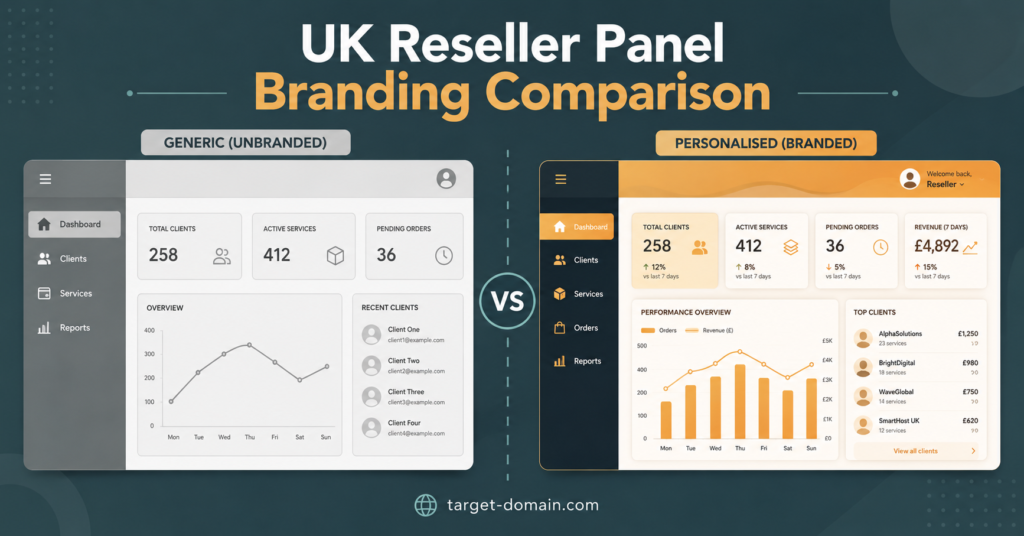
Here’s how the two most common setups compare in practice. A standard reseller panel puts the supplier’s own name on the app and panel login, gives customers a generic login experience, and usually has no threshold to unlock, since it’s included from the first credit purchase. A white label panel replaces that with your own app name and, once you cross the provider’s credit threshold, your own custom domain, so customers never see the supplier’s name at any point in the journey. The trade-off is that white label setup usually takes a day or two to configure rather than being instant, and the custom domain tier specifically is often gated behind a minimum credit volume.
Common Mistakes New Resellers Make With Branding
The most frequent mistake is paying for white label before there’s a customer base large enough to justify it. Branding protects trust at scale, but a reseller with five customers gets little practical benefit from a custom domain that costs credits or volume commitment to unlock. It usually makes more sense to prove the business works first, then invest in branding once renewals are the priority.
The second common mistake is assuming white label equals legitimacy. A rebranded app tells customers nothing about whether content is delivered through properly licensed channels. Branding is a business decision about presentation, not a compliance statement, and treating it as one can create a false sense of security for both the reseller and the customer.
The third mistake is neglecting support scripts after rebranding. Once your brand is the only one customers see, every support message, every login instruction, and every troubleshooting guide needs to reference your name consistently. A stray screenshot or instruction sheet that still shows the original provider’s branding undoes the whole point of paying for white label in the first place.
Reseller vs Sub-Reseller: Who Actually Needs White Label
For a reseller selling directly to end viewers, white label branding is mainly about trust and professionalism. Customers renew with businesses that feel established, and a consistent brand identity across the app, the website, and any support materials contributes to that impression over time.
For a reseller who wants to sell credits to other resellers underneath them, meaning sub-resellers, white label branding becomes closer to a requirement than a nice-to-have. Sub-resellers are effectively running their own businesses on top of your account, and if your panel still shows the original supplier’s name, it undermines the entire arrangement you’re offering them. Most UK panels that support sub-reseller structures tie white label access to the same credit or volume threshold that unlocks sub-reselling itself, which is a reasonable pairing since both privileges assume a reseller operating at real scale.
Pro tip: Keep a written record of exactly what your provider agreed to include under white label, app name, domain, support materials, so there’s no ambiguity if the setup ever needs revisiting months later.
Pricing and Volume Considerations
White label access rarely comes with a separate published price on UK panels. Instead, it’s usually bundled into reaching a specific credit tier, meaning the cost is really about the volume commitment rather than a standalone fee. Before assuming white label is expensive, check whether it’s simply a byproduct of buying credits in bulk, which many active resellers do anyway once their customer base grows past a few dozen lines.
It’s also worth checking whether volume-based credit pricing improves at the same threshold that unlocks white label. Panels often structure their tiers so that the point where branding becomes available coincides with a lower per-credit rate, which softens the practical cost of reaching that level.

Reseller Panel Setup Considerations
Before requesting white label branding, take a proper look at the practical setup requirements a UK IPTV Panel reseller needs in place first. A panel that’s stable, well documented, and easy to manage matters more than branding on day one, since a rebranded but poorly performing service damages trust faster than an unbranded but reliable one ever would. Once the fundamentals are solid, reviewing how reseller profit margins actually work helps decide whether the volume needed for white label makes financial sense yet.
Anyone comparing panels for the first time should also look at the full reseller plans page for a specific provider before assuming every panel structures its tiers the same way. Credit thresholds, per-credit pricing, and what counts as included branding vary enough between UK panels that it’s worth checking the specifics rather than relying on general assumptions.
Frequently Asked Questions
Does a white label panel change the actual streaming quality?
No. White label only changes the branding layer, the app name and login domain your customers see. The underlying servers, channel delivery, and stream stability are identical to the non-branded version of the same panel.
How long does it usually take to set up white label branding?
Most UK panels configure it manually rather than instantly, so a day or two is typical. Instant self-serve white label branding is uncommon, since custom app builds and domain setup generally need manual handling on the provider’s end.
Can I switch to white label after I’ve already started reselling with the standard panel branding?
Usually yes, though check whether the rebrand applies to your existing customer lines or only to new ones created afterward. Some providers need to reissue login details for existing customers when the app name changes.
Do I need white label to sell to sub-resellers?
It’s not always a strict requirement, but most panels tie sub-reseller access and white label branding to the same credit threshold, since both assume the reseller is operating at meaningful volume.
Is a custom domain always included with white label?
Not always. Some panels include a rebranded app name at a lower tier and reserve the custom domain for a higher credit threshold. Confirm which parts are included before assuming you’re getting the full package.
What happens to my branding if I want to change providers later?
This depends entirely on how the provider configured your setup. A domain you registered and control yourself transfers more easily than one the provider set up and hosts on their infrastructure, so it’s worth clarifying ownership of the domain before committing.
If you’re weighing up a White Label IPTV Reseller Panel UK option against a standard unbranded panel, the decision usually comes down to where your business actually is right now. Branding builds trust and supports renewals once you have a real customer base, but it adds little value to a reseller just starting out with a handful of lines. Confirm exactly what’s included, check the credit threshold involved, and get the setup timeline in writing before you pay for it. Once your volume genuinely justifies it, white label branding is one of the more straightforward upgrades a UK reseller can make.
Reseller Branding Checklist
- Confirm whether white label covers app name only, or app name plus a custom login domain
- Ask for a realistic setup timeline rather than accepting a vague estimate
- Check whether existing customer lines get rebranded or only new ones going forward
- Clarify who owns and controls the domain if one is included
- Confirm the credit threshold required, and whether it aligns with a better per-credit rate
- Keep your own written record of what was agreed before paying