Book Appointment Now
Best IPTV Services in USA: A Practical 2026 Buyer’s Guide
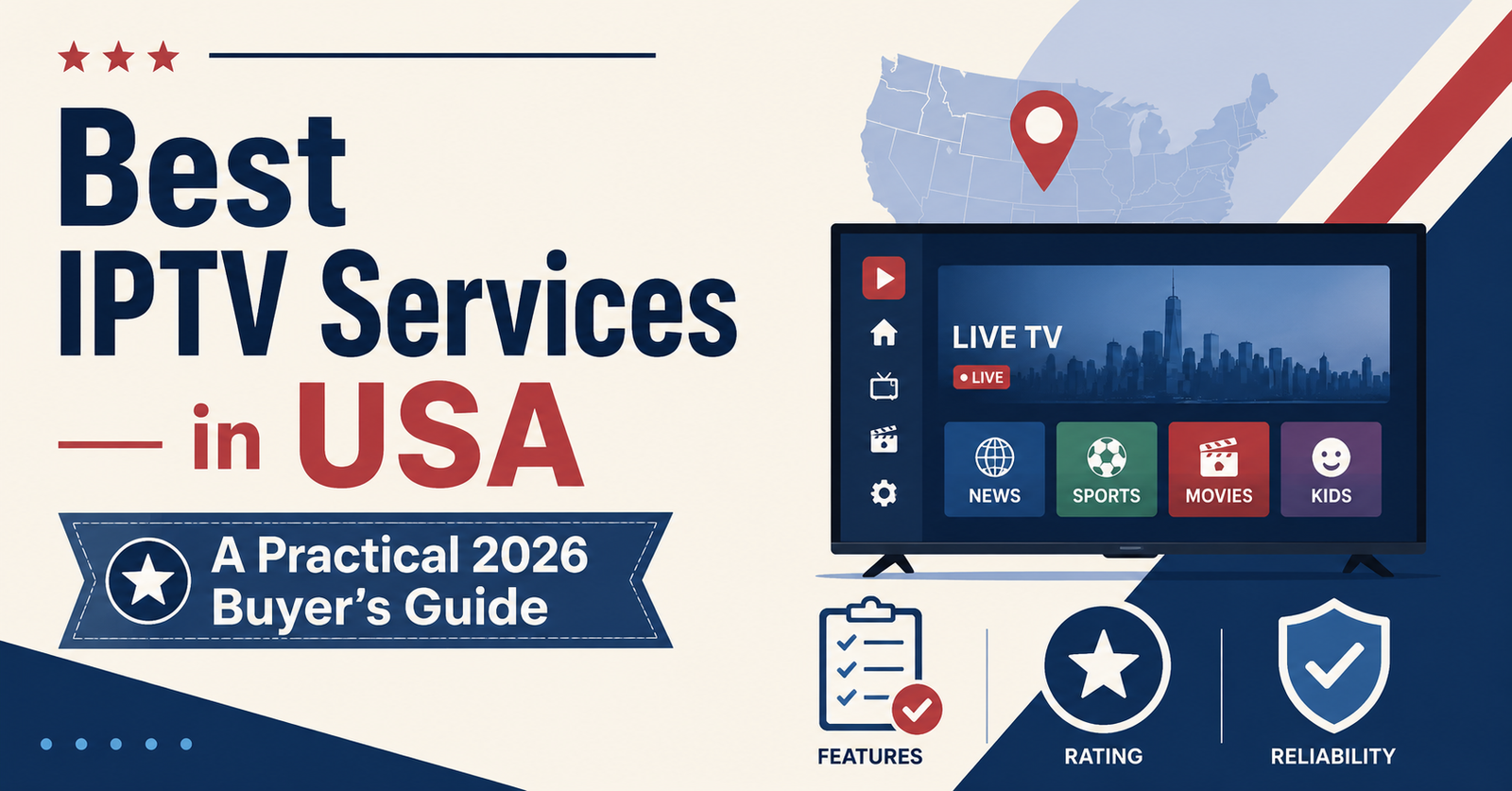
Anyone typing “Best IPTV Services in USA” into Google is usually trying to solve one of two problems: they want a cheaper alternative to a cable bundle, or they have already tried one IPTV service and been burned by buffering, a vanished support team, or a sudden price hike. There is no single provider that fits every household, but the strongest options in the US market in 2026 share a handful of traits: transparent pricing, a real trial before payment, wide device support, and a support team that still answers after the sale.
What “best” actually means when you are comparing US IPTV services
There is no official ranking body for IPTV providers, and any article claiming one service is definitively the best is skipping past the fact that “best” depends entirely on what you are watching, on what devices, and how many people in the house are streaming at once. A household that mostly wants US sports and local news has different priorities than someone who wants a broad international channel mix. Rather than chasing a single winner, it helps to judge providers against the same short list of criteria every time, which is what the rest of this article walks through.
The honest starting point is that the IPTV market includes a very wide range of quality, from professionally run services with proper billing and support, down to informal UK IPTV resellers operating out of a group chat with no accountability at all. Telling the two apart before you pay is the actual skill here, not memorising a top-ten list.
How US IPTV services differ from cable and mainstream streaming apps
IPTV, or Internet Protocol Television, delivers channels and on-demand content over an internet connection instead of a satellite dish or a cable box. That is the whole technical definition, and it is worth being clear about it, because IPTV is a delivery method, not a guarantee of what content you are legally allowed to access. Some IPTV services operate through properly licensed content agreements, similar to how a mainstream streaming app works, while others rebroadcast channels without the rights to do so. The technology looks the same from the customer’s side either way, so the delivery method itself tells you nothing about legality. What matters is who holds the rights to the content being streamed, and whether the provider can speak plainly about that when you ask.
Compared with a single mainstream app, most IPTV services bundle a large number of live channels alongside on-demand libraries, often across sports, news, entertainment and international content, which is the main reason households consider switching away from several separate subscriptions. The trade-off is that channel line-ups and stream stability vary far more between IPTV providers than they do between major streaming platforms, so the research step before you pay matters more here than it would for a well-known app.
Questions worth asking any provider before you pay
| Question to ask | Why it matters |
|---|---|
| Who is behind this service and where are they based? | A provider that hides ownership and contact details gives you nowhere to go if something breaks. |
| What does the trial actually let me test? | A short trial on real devices tells you more about buffering and channel stability than any review page. |
| How many devices can run on one subscription at once? | Connection limits decide whether a family plan actually works for a household with several screens. |
| What is the refund or cancellation policy in writing? | A verbal promise means nothing once payment has cleared, a written policy is something you can hold them to. |
| Where does support sit when a stream goes down mid match? | Support that only answers during office hours is not much help for evening or weekend sports viewing. |
A short conversation before payment tells you more than a review page ever will. The table below covers the questions that actually separate providers worth trusting from ones you should walk away from.
Illustrative example: a provider like Skip This, or any similarly positioned service, should be able to answer every question in that table without hesitation. If a provider dodges the ownership question or gets vague about the trial, that reluctance is itself useful information, and it applies equally whether the provider is a small operator or one with a polished website.
Where legality and content rights fit into the decision
This is the part of the search that most articles either skip entirely or answer with false confidence, so it is worth being direct about it. IPTV as a technology is legal. Whether a specific service is legal depends on whether it holds the rights to distribute the content it streams, and that is not something you can verify just by looking at a professional-looking website, a working payment page, or a large channel count. None of those things prove licensing status.
Rather than taking a provider’s word for it, ask direct questions about how content rights are handled, and treat vague or evasive answers as a warning rather than a technicality. Responsibility for lawful use ultimately sits with the person accessing the service, so understanding this distinction protects you, not just the provider. If you want a fuller breakdown of how to think through this before subscribing, this guide to legal IPTV providers walks through the same evaluation approach in more depth.
Device and app compatibility across the US market
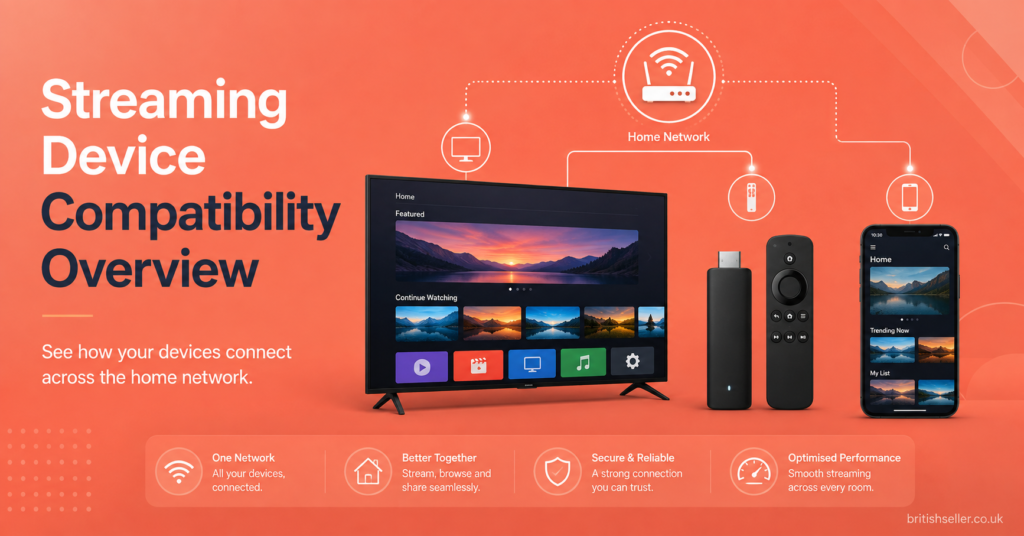
American households run a wider mix of streaming hardware than almost any other market, from Smart TVs and Fire TV Stick to Android boxes, Apple TV and mobile phones, and a service that only works cleanly on one or two of those is going to frustrate someone in the household eventually. Before subscribing, confirm the service supports the specific device you already own, rather than assuming compatibility because a provider lists “all devices” on its homepage. Ask specifically whether the app is a dedicated one built for that platform, or whether you would need a third-party player and a manual playlist setup, because the second option is considerably less beginner-friendly and more prone to configuration mistakes.
If you are still deciding which player app to install once you have a service lined up, this comparison of IPTV apps and players covers the practical differences between the common options across the major device types.
Pricing patterns worth understanding, not chasing the cheapest number
Pricing across the IPTV market varies widely, and the cheapest option on a search results page is rarely the safest choice. A provider charging noticeably less than everyone else is either operating on thinner infrastructure, cutting corners on support, or is not a stable business at all. That does not mean the most expensive service is automatically the best either. What matters more than the number itself is what is included at that price: how many simultaneous connections, what happens if the service goes down, whether there is a genuine refund window, and whether the price you see is the price you actually pay after any hidden setup or activation charge.
Longer subscription terms usually work out cheaper per month than paying monthly, but only commit to a longer term once you have tested the service properly during a shorter trial period first. Paying a full year upfront to an untested provider removes your ability to walk away if the service turns out to be unreliable.
Pro tip: Test any provider, including one like Skip This, across at least two different devices during the trial period, not just one. A stream that looks smooth on a phone can behave very differently on a Smart TV app.
Pro tip: Ask what happens to your subscription if the provider changes its server infrastructure. A reputable provider will have a straightforward answer rather than a shrug.
What good service actually looks like once you are subscribed
| Good sign | Warning sign |
|---|---|
| Clear pricing shown before you enter payment details | Price only revealed after you message an agent or join a group chat |
| A working trial you can test on your own device | No trial offered, or a trial that never actually connects |
| A named support channel that responds within a reasonable time | Support that vanishes the moment you have already paid |
| Honest answers about content rights and delivery when asked | Pressure to buy immediately with claims of a limited-time discount |
The table below sums up the signals worth watching for, both before and after you sign up. None of these are absolute guarantees on their own, but taken together they build a reasonably clear picture of whether a provider treats its customers as long-term relationships or one-time transactions.
Reliability rarely shows up in a first impression. A provider can look polished during a trial and still struggle during peak viewing hours, which is why checking how the service performs during genuinely busy periods, such as a major sporting event or a Friday evening, tells you more than a quiet Tuesday afternoon test ever will.
If you are approaching this from the business side
Not everyone searching this keyword is a subscriber. Some readers are exploring whether reselling IPTV subscriptions in the US market is worth pursuing as a side income or a full business. That is a genuinely different evaluation, with its own set of questions around panel reliability, credit systems, sub-reseller structures and customer support responsibility, and it deserves more depth than a short section here can give it fairly. This breakdown of IPTV Panel reseller profit margins covers that side of the decision on its own terms, including the operational trade-offs that a subscriber-focused comparison like this one does not need to get into.
A calmer way to shortlist providers
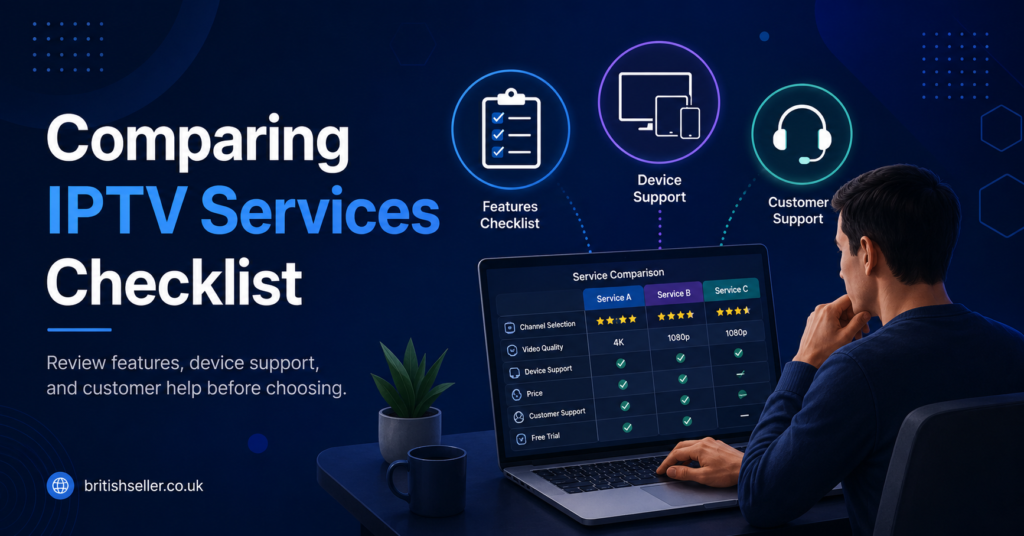
Rather than opening ten browser tabs and comparing marketing claims, a more useful approach is to shortlist two or three providers, request a trial from each, and run the same short checklist against all of them on the same devices you actually own. Note how each one handles the questions from the earlier table, not just how the stream looks. A provider that answers plainly, offers a real trial and has a clear refund policy has already told you most of what you need to know, often before you have watched a single channel.
Frequently asked questions
Is there one provider that counts as the best IPTV service in the USA?
No single provider fits every household. The right choice depends on the devices you own, how many people are streaming at once, and what content mix you actually want, so comparing a shortlist against the same checklist is more useful than looking for a single winner.
Is IPTV legal in the United States?
IPTV is a delivery method, not a content source, so the technology itself is not illegal. Whether a specific service is legal depends on whether it holds proper rights to the content it streams, which is not something you can confirm just by looking at the website or payment process.
How can I tell if a trial is worth trusting?
A trustworthy trial lets you test real streams on your own device without demanding full payment upfront. If a provider refuses a trial or offers one that never actually connects, treat that as a warning sign rather than a technical hiccup.
Do I need special equipment to use an IPTV service?
Most services work through an app on devices you likely already own, such as a Smart TV, Fire TV Stick, Android box or phone. Some setups use a third-party player app instead of a dedicated one, which is worth asking about before you subscribe.
Why do IPTV prices vary so much between providers?
Pricing reflects differences in infrastructure, support quality and business stability. A price that looks unusually low compared with the rest of the market is often a sign of cut corners rather than a genuine bargain.
What should I do if a provider I am considering, such as Skip This, will not answer questions about ownership or support?
Treat that reluctance as useful information rather than a technicality. A provider confident in its own service usually has no difficulty answering straightforward questions before you pay.
Conclusion
There is no shortcut that replaces a short, direct trial and a handful of honest questions, and that remains true whichever way the market moves through 2026. Finding the Best IPTV Services in USA for your own household comes down to matching a provider’s transparency, device support and refund terms against what you personally need, rather than trusting a headline claim. No provider, including illustrative examples like Skip This, should be judged as automatically safe, licensed, or guaranteed reliable based on appearance alone. Test before you commit, ask the questions that matter, and keep your first payment small enough that a bad choice costs you very little to walk away from.
Subscriber Checklist
- Confirm the exact primary keyword criteria matter to you: device count, content mix, and simultaneous streams
- Request a trial and test it on the actual device you plan to use most
- Ask directly about ownership, support hours and refund policy before paying
- Check pricing is shown clearly with no hidden setup charges
- Avoid committing to a long-term plan before testing performance during a busy viewing period
- Keep a written record of what was promised, including any refund terms