
Book Appointment Now
IPTV Reseller Customer Support: Setting Up Your Process 2026
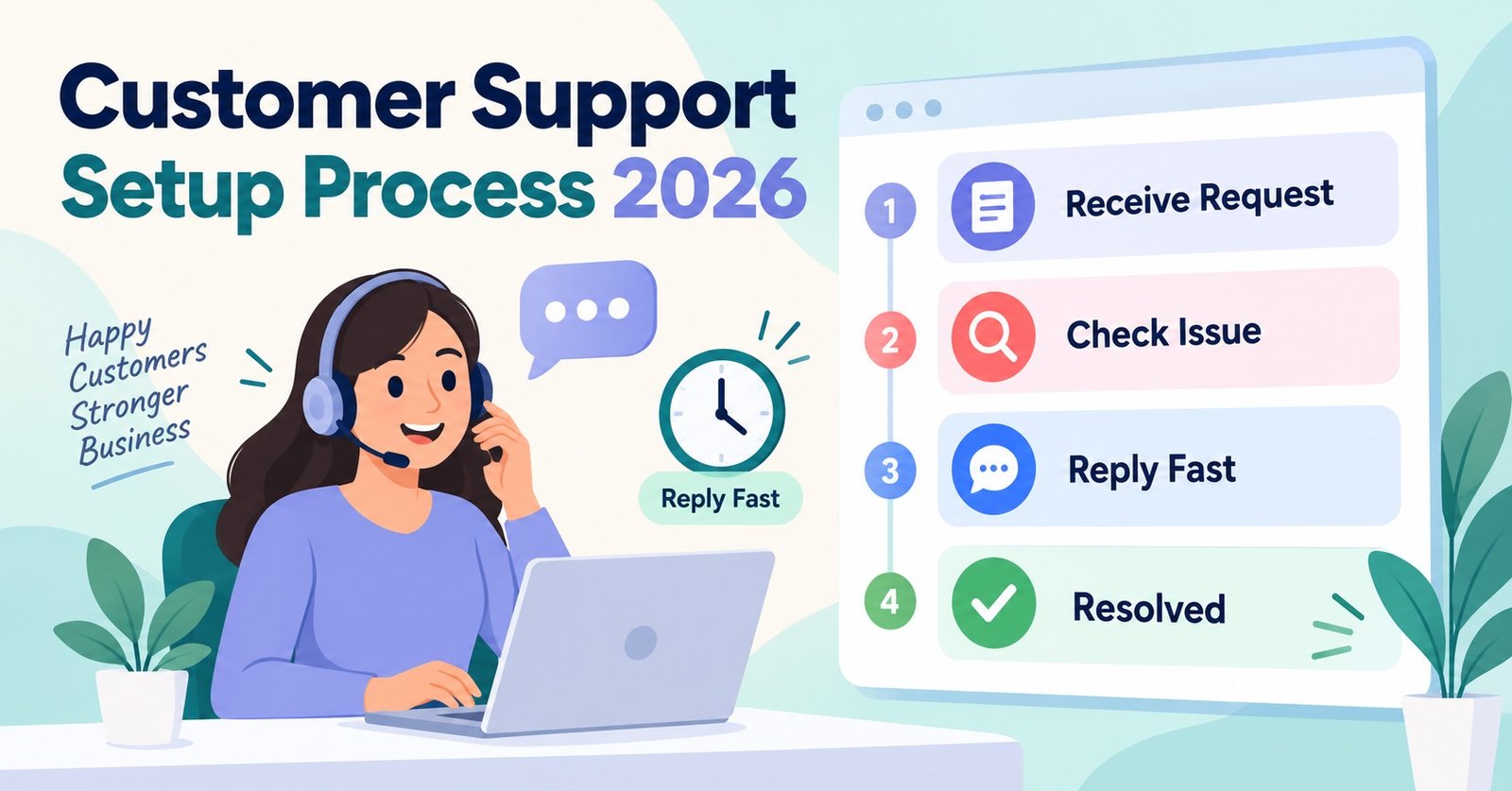
IPTV Reseller Customer Support is the process a reseller runs to catch problems before a customer cancels over them: someone answering messages, a rough idea of how long a fix should take, and a clear line between what you can solve yourself and what needs your upstream provider. Most IPTV panel resellers already do a version of this without calling it a process. The gap only shows up when volume rises and messages start sitting unanswered for hours.
The mistake that costs the most renewals isn’t a bad server. It’s treating support as something you react to rather than something you run. A customer who messages twice with no reply doesn’t wait for a third attempt. They search for a replacement instead, and by the time you reply, the account is already gone quiet for good.
What IPTV Reseller Customer Support Actually Covers
Strip away the branding and IPTV Reseller Customer Support breaks into three separate jobs that get bundled together far too often.
The first is device and app issues: black screens, buffering, login failures, EPG gaps. These sit almost entirely on the customer’s end, their app, their connection, their device, and they make up the bulk of daily messages for most IPTV resellers.
The second is account and billing: renewal timing, line duration, payment confirmation, package changes. This is entirely yours to manage and has nothing to do with your upstream provider.
The third is genuine stream or infrastructure faults: a channel down across your whole panel, a server outage, a widespread quality drop. This is the smallest category by volume but the one that actually needs your provider, and confusing it with the first category wastes time on both sides.
Treating all three as one undifferentiated inbox is where most support processes fall apart. A customer with a black screen doesn’t need the same response as a customer whose renewal payment hasn’t registered, and answering both the same way trains customers to expect a slow, generic reply regardless of what they actually asked.
Why Most Messages Aren’t About Your Panel At All
If you track your own ticket volume for even a fortnight, the pattern becomes obvious fast: the overwhelming majority of complaints trace back to the app or device the customer is using, not the service behind it. A structured troubleshooting approach for app-side faults resolves a large share of these before they ever need escalating, because the fix usually sits in a cache clear, a re-login, or a device restart rather than anything happening on the delivery side.
This matters for how you staff support, not just how you answer it. If most tickets are app-layer, the person answering messages doesn’t need deep technical access to your panel, they need a short, repeatable set of checks they can walk a customer through in two or three messages. Save that as a reusable script rather than retyping the same explanation every time a new customer hits the same wall.
Pro tip: Keep a short, plain-language fix list for the three or four most common app errors, and paste it as a first reply before asking the customer any diagnostic questions. Half the time it resolves the ticket without further back and forth.
How Many Support Channels You Actually Need
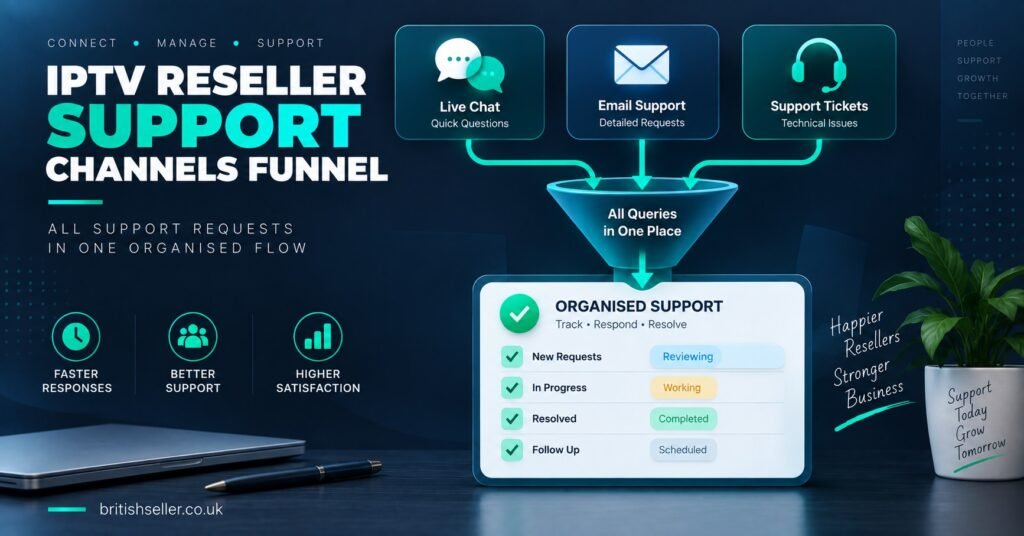
Running support across WhatsApp, Discord, email, Telegram and a ticketing tool all at once sounds thorough. In practice it usually means messages sit unread in whichever channel you checked last, and customers repeat themselves across two platforms because nobody joined the dots.
Most resellers manage perfectly well with one primary channel for speed, typically an instant messaging app, and one secondary channel for anything that needs a paper trail, such as payment confirmations or refund requests. Anything beyond that adds coverage gaps rather than closing them, unless you already have someone dedicated to monitoring each one separately.
Response time matters more than channel count. A customer messaging at 9pm on a Saturday during a big match doesn’t care whether you’re on WhatsApp or email, they care whether someone replies before they’ve already found another seller. Decide on a realistic response window for peak hours and for quiet hours separately, and be honest with yourself about which one you can actually staff.
The Support Load That Starts Before the First Ticket
A large share of early support tickets aren’t really faults at all, they’re onboarding gaps. A customer who wasn’t shown how to install the app properly, or wasn’t told which login type they’re using, will message you within the first day asking questions that a clear setup message would have answered upfront. Getting the customer onboarding process right at the point of sale removes a meaningful chunk of support volume before it ever reaches your inbox.
This is worth separating from ongoing support in how you think about it. Onboarding tickets are front-loaded and predictable, so they can be solved with better documentation once and reused indefinitely. Ongoing support tickets are unpredictable by nature and need a live person responding, which is a different resourcing problem entirely.
| Ticket Type | What It Usually Means | Who Should Handle It |
|---|---|---|
| App won’t load or logs out | Device, cache, or credential issue | You, with a scripted fix list |
| Payment sent but line not active | Manual activation delay or missed confirmation | You, checking your own records |
| One or two channels buffering | Localised or device-specific issue | You, testing on your own line first |
| Whole panel down or widespread faults | Server or upstream infrastructure fault | Escalate to your provider immediately |
| Customer asking to change package or duration | Standard account management | You, from your dashboard |
When a Complaint Is Actually a Renewal Warning
Not every message that sounds like a complaint is really about the fault being reported. A customer who suddenly starts questioning value, asking whether cheaper options exist, or mentioning they’re “still deciding whether to continue” is telling you something about the renewal, not the stream. Reading support messages purely at face value misses this, and it’s usually the same customers who go quiet a few weeks later without renewing.
This is where support and renewal management genuinely overlap. A ticket handled quickly but coldly can still cost you the renewal, while a slower fix delivered with a bit of genuine reassurance often buys enough goodwill to carry the customer through to their next payment. Speed matters, but tone matters almost as much once the fault itself is resolved.
Escalating to Your Provider Without Losing the Customer
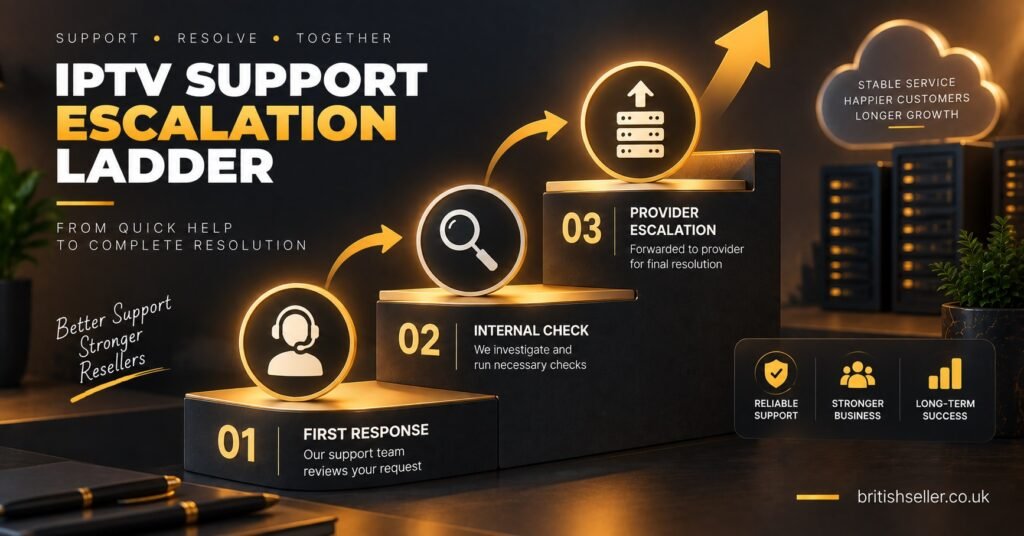
The moment you decide a fault is genuinely upstream, the temptation is to tell the customer exactly that and step back. It rarely lands well. Customers don’t distinguish between your panel and your provider’s infrastructure, they see one service, and “it’s not us, it’s them” reads as an excuse even when it’s technically accurate.
A better approach is to acknowledge the issue, give a rough honest timeframe rather than a vague “we’re looking into it”, and follow up once it’s resolved rather than waiting for the customer to chase you again. Providers with genuine multi-server failover generally resolve widespread faults quickly, but even a short outage feels longer to a customer who hears nothing during it.
Support Habits That Quietly Cost Renewals
A few patterns show up again and again in resellers who struggle with support despite having a genuinely stable service behind them.
Answering only when convenient rather than within a set window trains customers to expect delay, and delay reads as neglect even when the eventual fix is perfectly fine. Customers rarely remember how good the fix was if getting there took two days.
Diagnosing over message after message instead of front-loading the obvious checks wastes everyone’s time. Asking “have you tried restarting the app” as a fourth message, after three back-and-forth exchanges that could have included it upfront, feels like the IPTV panel reseller wasn’t paying attention.
Treating every fault as your own responsibility, even the ones that are clearly device-related, sets an expectation you can’t sustain. Being clear and calm about what falls outside your control protects your time without sounding like you’re dodging blame.
Going quiet during a genuine outage is the costliest habit of all. Customers can tolerate a fault. What they struggle to tolerate is silence while it’s happening, because silence reads as indifference regardless of the actual cause.
Pro tip: If you can’t fix something immediately, send a short update anyway, even if it just says you’re checking. A two-line message within the hour does more for retention than a perfect fix delivered a day later with no warning in between.
Common Questions About IPTV Reseller Support
Do I need a dedicated ticketing system as a small reseller?
Not usually at low customer counts. A shared inbox or a pinned WhatsApp conversation per customer works fine until you’re managing enough volume that messages genuinely get lost, at which point a lightweight ticketing tool earns its place.
Should I offer 24/7 support if I’m running this alone?
Be honest about your own capacity rather than promising round-the-clock coverage you can’t deliver. A clearly stated response window that you consistently meet builds more trust than an unrealistic promise you occasionally miss.
How do I handle a customer who blames me for an ISP block?
Explain plainly that some disruptions happen outside your panel or provider’s control, without turning it into a lecture. Where possible, suggest a practical workaround and move on rather than dwelling on whose fault it technically is.
What’s a reasonable first-response time to aim for?
There’s no universal figure, but consistency matters more than speed alone. A reseller who reliably replies within a few hours builds more confidence than one who sometimes replies in minutes and sometimes not for a day.
Is it worth automating any part of support?
Automating the repetitive parts, such as an initial fix-list reply or a payment confirmation message, frees up time for the messages that genuinely need a person. Automating the whole conversation tends to frustrate customers who already suspect they’re talking to a bot.
IPTV Reseller Panel Customer Support isn’t a single feature you switch on, it’s a set of small, repeatable habits: separating fault types before you respond, keeping a realistic response window, escalating honestly when something is genuinely upstream, and following up once it’s fixed rather than assuming silence is fine. None of it requires a large team or expensive tooling to start doing properly. It requires deciding, before the next busy Saturday hits, what your process actually is rather than figuring it out message by message under pressure.
Support Process Checklist
- One primary channel for speed, one secondary channel for anything needing a written record
- A short fix list ready for the most common app and device errors
- A clear internal rule for what counts as escalate to provider versus fix yourself
- A realistic response window for peak hours and a separate one for quiet hours
- A habit of sending a short update during any genuine outage, even without a fix yet
- Onboarding messages that answer the obvious first-day questions before they’re asked
- A note against any customer whose message reads more like a renewal doubt than a fault report

[…] you lose the natural monthly contact point where renewal conversations happen. Our breakdown of how IPTV panel reseller margins actually work goes through the pricing side in more […]