Book Appointment Now
IPTV Reseller Renewal Management: Retain & Automate 2026
IPTV reseller renewal management is the discipline of tracking every customer’s expiry date, contacting them before the line lapses, and turning that single moment into repeat monthly or yearly income instead of a lost customer. Get this wrong and a reseller business leaks revenue quietly, one missed renewal at a time, without ever showing up as a dramatic problem.
Why Renewals Matter More Than New Sign-Ups
New customers get the attention because they feel like wins. Renewals rarely get the same energy, yet they carry more of the actual profit. A customer who has already paid once, watched their content, and had a reasonable experience is far cheaper to keep than a new lead is to find. The maths behind this is simple: acquiring a customer costs time, trial credits, and sometimes a discount to close the sale, while renewing one usually costs nothing beyond a timely message.
Resellers who treat renewal as an afterthought tend to notice the pattern too late. A batch of twelve-month lines sold in one busy month all expire together a year later, and if nobody flagged that date, a chunk of the customer base can churn out within a fortnight. That’s not a service failure. It’s a scheduling failure.
How Renewal Timing Actually Works
Every subscription line has three dates worth thinking about: the activation date, the expiry date, and the point at which the customer is likely to notice their stream has stopped. The gap between the second and third is where resellers either look proactive or look careless.
A monthly customer who gets a friendly message two or three days before expiry rarely thinks twice about paying again. A monthly customer who only finds out their subscription lapsed because the screen went blank during a match is far more likely to shop around before coming back, if they come back at all. The renewal window is short, so the reminder has to arrive before the frustration does, not after it.
Yearly lines behave differently. A year is long enough that customers genuinely forget what they paid, what channels they had, and sometimes which reseller they even used. A reminder sent a week out is often too late for these customers; two to three weeks gives them time to notice the message, budget for it, and reply without feeling rushed.
Where Renewal Systems Break Down
Most missed renewals trace back to the same small number of causes, and almost none of them are about the underlying streaming service.
| Mistake | Likely Consequence | Better Approach |
|---|---|---|
| Relying on memory instead of a log | Expiry dates get missed silently | Keep a simple spreadsheet or panel export sorted by expiry date |
| Messaging customers only after expiry | Customer already frustrated or gone | Message before the line lapses, not after |
| Treating every customer the same way | Long-term clients feel like a number | Note payment history and preferences per customer |
| No plan for unresponsive customers | Line stays active unpaid, or drops with no warning | Set a short grace period with a clear cut-off |
| Buying credits reactively | Reseller runs short mid-renewal wave | Forecast credit needs against upcoming expiry dates |
Building a Renewal Calendar That Actually Gets Used
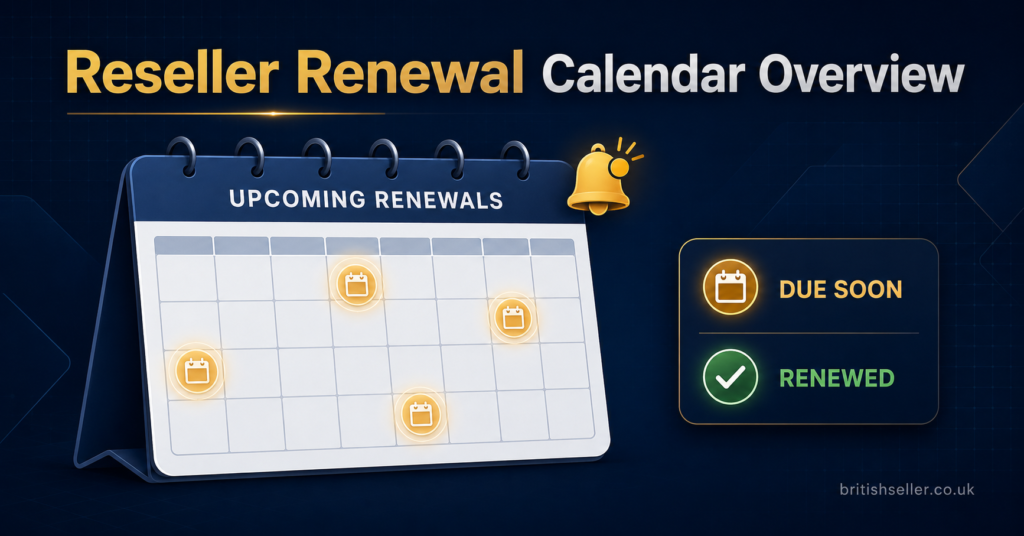
The system doesn’t need to be complicated to work. Many resellers start with nothing more than a spreadsheet: customer name, line duration, start date, expiry date, and a notes column for anything unusual. Sorted by expiry date, it becomes a simple to-do list rather than a record nobody opens.
As the customer base grows past thirty or forty lines, checking a spreadsheet daily becomes tedious, and this is usually when resellers move to whatever export or reporting function their IPTV reseller plans offer through the dashboard itself. The principle stays identical either way: know what’s expiring this week before the customer does.
Pro tip: Group customers by expiry week rather than by name. Sending five renewal messages in one sitting on a Tuesday is far more sustainable than trying to remember individual dates scattered across the month.
Credits, Cash Flow, and Renewal Waves
Renewal management isn’t purely a customer-facing task. It has a direct effect on how a reseller manages their own credit balance. A reseller who sold thirty twelve-month lines in the same promotional week will face thirty renewals in the same week the following year, all needing credits at once. Without forecasting, that wave can catch a reseller short on stock exactly when demand is highest, which is a poor time to be waiting on a top-up.
Spreading renewal dates deliberately, where possible, softens this. Some resellers stagger yearly renewals by offering a small incentive for customers to renew slightly early rather than exactly on the anniversary date, which smooths out both the workload and the credit demand across the month instead of concentrating it. Understanding how IPTV reseller Panel profit margins actually behave over a full year, rather than just on the first sale, makes this forecasting far more useful.
Pro tip: Keep a small buffer of spare credits ahead of any month with a known renewal cluster, rather than buying reactively once messages start going unanswered because a line has already dropped.
Messaging Customers Without Sounding Like a Chase
The tone of a renewal message matters more than resellers often assume. A message that reads like a debt collection notice tends to get ignored or resented, even by customers who were always going to pay. A short, friendly note that mentions the expiry date, confirms the price, and makes paying simple usually converts far better than a long or formal one.
Timing the follow-up matters too. If a customer hasn’t responded within a couple of days, a single polite nudge is reasonable. Repeated messages within the same day feel like pressure, and pressure is exactly what pushes borderline customers toward cancelling instead of renewing.
Sub-Reseller Renewals Carry Extra Risk
For resellers who supply credits to sub-resellers, renewal management gets an extra layer. A sub-reseller who forgets to renew their own end customers doesn’t just lose that customer, they can lose confidence in the whole arrangement, and that reflects back on the parent account. Sharing a basic renewal tracking habit with sub-resellers, even something as simple as the spreadsheet approach described above, tends to reduce disputes over “the service went down” complaints that were actually unpaid renewals.
Anyone still deciding whether to take on sub-resellers or expand their own line count in the first place should look at what running a larger operation actually demands day to day, which is covered in more detail in IPTV reseller requirements.
When to Let a Line Go
Not every expired line deserves an aggressive follow-up. Some customers signed up during a promotion, used the service for a month, and simply moved on. Chasing an unresponsive customer for weeks costs more in time and goodwill than it returns. A reasonable approach is one initial reminder, one short follow-up, and then a final message confirming the line will be paused. Leaving that door open without repeatedly knocking on it tends to bring more customers back later than constant pressure ever does.
Frequently Asked Questions
How far in advance should I message a customer about renewal?
For monthly lines, two to three days ahead is usually enough. For yearly lines, two to three weeks gives customers time to notice and budget, since a year is long enough for the original purchase to have slipped their mind.
Should I renew a line automatically or wait for the customer to confirm?
Waiting for confirmation is generally safer for a reseller business, since it avoids disputes over unexpected charges. A short message asking the customer to confirm before the line is renewed keeps the relationship transparent.
What should I do if a customer’s line has already expired?
Send one clear message explaining the line has lapsed and how to renew it. Avoid reactivating before payment is confirmed, since this can quietly turn into unpaid service that’s hard to unwind later.
How do I stop renewals from piling up in the same week?
Track expiry dates from the point of sale, and where reasonable, offer a small incentive for customers to renew slightly ahead of the exact anniversary date. This spreads both messaging and credit demand more evenly across the month.
Does renewal management differ for sub-resellers?
The core habits are the same, but the stakes are higher, since a missed renewal at sub-reseller level can look like a service failure to the end customer and reflect on the whole chain above them.
Conclusion
IPTV Panel reseller renewal management comes down to a handful of habits done consistently: know what’s expiring before the customer notices, message with enough notice to feel helpful rather than urgent, forecast credit needs against renewal waves instead of buying reactively, and know when to let an unresponsive line go rather than chasing it indefinitely. None of this requires expensive tools. A sorted spreadsheet and a weekly habit will outperform a reseller who relies on memory, no matter how good that memory usually is. The next practical step is simply pulling together a list of every line expiring in the next thirty days and working through it before any of them go quiet.
Reseller Renewal Checklist
- List every active line with its expiry date, sorted soonest first
- Message monthly customers two to three days before expiry
- Message yearly customers two to three weeks before expiry
- Set a clear grace period and cut-off for unresponsive customers
- Forecast credit needs against any known renewal clusters
- Keep a buffer of spare credits ahead of high-renewal months
- Share basic renewal tracking habits with any sub-resellers
- Review which lines lapsed each month and note why