Book Appointment Now
IPTV Reseller Panel Security Questions to Ask a Provider 2026
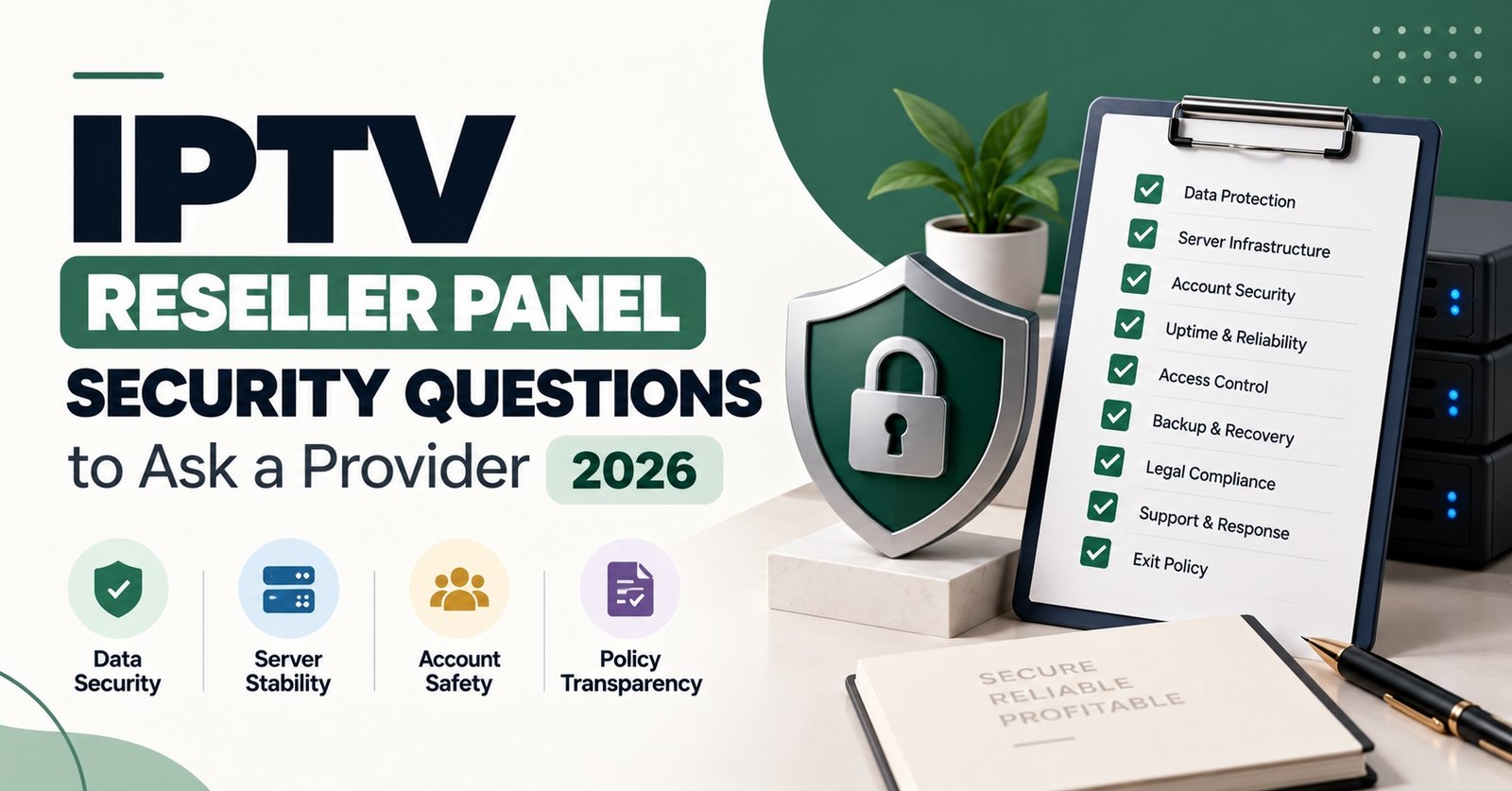
IPTV Reseller Panel Security mostly comes down to protecting one login, because whoever holds it can spend your prepaid credits, create or suspend lines and read your customer list. A unique password, two-step verification on the panel and on the email address attached to it, separate logins for anyone who helps you, and tidy handling of customer details cover most of the real risk.
Panels are rarely broken into by clever technical attacks. The usual routes are a reused password, a convincing message about a “suspended account”, or a former helper whose access nobody removed. So the useful question is not how secure the provider’s servers are, since you cannot see those, but how well you control the parts that belong to you. The checklist at the end puts that into order, and the sections below explain the reasoning behind each item.
What a stolen panel login is actually worth
A reseller panel is closer to a prepaid wallet attached to a customer database than to an ordinary website account. Someone inside it can spend your remaining credits creating lines for themselves or for resale. They can renew, suspend or delete customer lines. They can read usernames, contact notes and expiry dates, which together make a ready-made target list for scam messages. If you run sub-resellers, they may be able to edit those accounts or move credits as well.
The credit loss is only part of the damage. Customers whose lines vanish or change will blame you, not an unknown attacker, and they will not wait politely for an explanation. A drained balance can erase a good share of a month’s earnings, which is worth keeping in mind when you look at how reseller margins work and decide how much a few hours of security housekeeping is worth.
The login, and the email address behind it
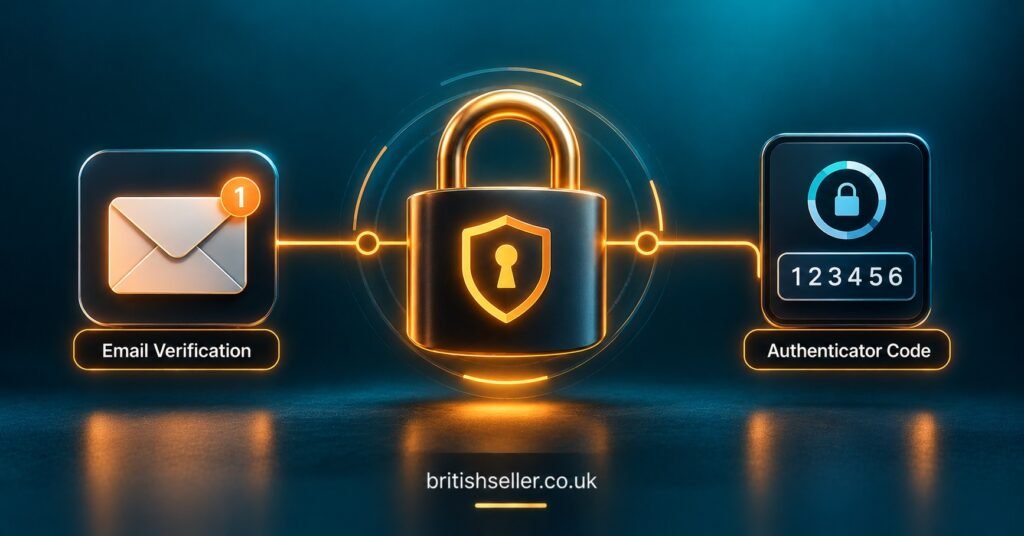
Start with the email account, because that is where password resets land. If someone controls your inbox, a strong panel password will not save you, since they can simply ask for a new one. Protect the email account first, with a long unique password and two-step verification.
For the panel itself, the UK National Cyber Security Centre recommends a unique password for each online account and turning on two-step verification wherever it is offered. Its suggested method for a password you can actually remember is to join three random words together. The word “random” matters: a favourite football team and your birth year do not count. A password manager makes unique passwords practical, and it should be protected with its own strong primary password plus two-step verification.
Not every IPTV reseller panel offers two-step verification. If yours does not, the account is only as strong as the password and the email behind it, so ask the provider whether it is planned and be stricter about everything else on this page. Also avoid sending panel logins to partners or helpers through messaging apps. The details then sit in chat history on every device that app is installed on, long after the conversation is forgotten.
Pro tip: After changing a panel password, check whether the panel lets you end other active sessions. If it does, use it, because an old session on a forgotten laptop can outlast a password change.
IPTV Reseller Panel Security when other people have access
Security gets harder the moment someone else touches the panel. If your panel only supports one login, every helper shares it, and you lose any ability to tell who created a line, who issued a refund or who renewed an account for a friend. Where the panel supports separate logins or limited permissions, give each person their own and grant only what the job needs. Someone who answers setup questions does not need to move credits.
Leaving is the weak point. When a helper stops working with you, remove their access that day. If they ever knew a shared password, change it and treat the old one as burned. Write down who has access, when it was granted and what it covers, even if the list is only a note in your password manager.
Sub-resellers need a different kind of attention. They run their own businesses, and a compromised sub-reseller account can cost you credits you supplied in good faith. Agree in writing that they will use unique passwords and protect their email, keep a simple record of every credit transfer, and never act on a request to move credits or reset access unless you have confirmed it through a contact you already hold. If you are still working out what a reseller operation needs in place, IPTV reseller requirements in the UK covers the groundwork.
Customer details you probably keep for too long
Panel notes fields tend to become a dumping ground: full names, phone numbers, device details, payment references, sometimes screenshots of bank transfers that show account numbers. All of it becomes a liability if someone gets in. Keep only what you need to renew and support a customer, and delete the rest, including old trial records that never converted.
Where you hold personal data you also have legal duties, and they differ by country. In the UK, data protection law applies to small businesses too, and it is worth checking with the Information Commissioner’s Office whether you need to register and pay the data protection fee. Other English-speaking markets have their own rules. This is general information rather than legal advice, so confirm what applies to you.
Spreadsheets deserve the same scrutiny as the panel. A customer list exported for convenience and left in a shared folder is easier to steal than the panel it came from. And if you ever do need to tell customers something has gone wrong, tidy records make it far quicker to work out exactly who is affected.
Messages that try to get your login
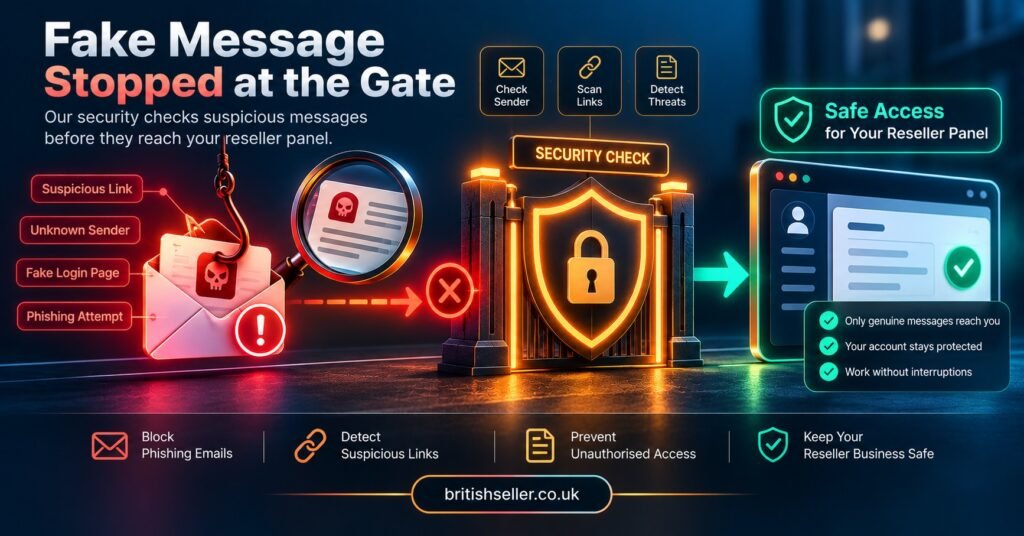
Most attacks on resellers are conversations, not code. The attacker needs you to hand over a password, a verification code or a payment, and the approach is usually dressed up as urgency. These are the patterns worth recognising.
| Message you might receive | Safer response |
|---|---|
| “Your panel will be suspended unless you verify now”, with a link | Ignore the link. Open the panel from your own saved bookmark and look for notices there |
| A “support agent” contacts you first and asks for your password or a code | Genuine support does not need either. Contact the provider through the channel on their official site |
| A customer sends a “receipt” with a link to view it | Check your bank or payment account directly, never through the link |
| A new “supplier” offers cheaper credits if you share panel access to move your balance | Decline. Credits are never moved by handing over a login |
| A sub-reseller on an unfamiliar number asks for access to be reset | Verify through the contact details you already hold before changing anything |
The common thread is that a legitimate request rarely needs you to act within minutes through a link someone else supplied. Slowing down by two minutes and going to the source yourself defeats most of these.
Line-level controls worth using, and their limits
Controls on individual customer lines protect your credits, not your panel login, and it helps to keep those two jobs separate. Connection limits discourage a single paid line from being shared among many households. Where a panel offers IP restriction on a line, it can be useful for a customer who is clearly being abused, but it can also lock out an honest customer whose home or mobile connection changes address. Use it line by line rather than as a default.
When you suspect a line is being misused, suspend it before deleting it, so you keep the record while you investigate. Be equally careful with trial lines. Free trials are an obvious route for repeat abuse, so qualifying the person asking, and noting who received one, saves credits over time.
Pro tip: Once a week, scan the list of lines created recently. An entry you do not recognise is the fastest early warning that someone else is working inside your panel.
Questions to ask before you trust a provider with your credits
Everything above is your side of the bargain. The other side is what the provider’s panel lets you do. Before buying, ask questions that have concrete answers.
Can reseller accounts use two-step verification? Can you create separate logins with limited permissions? Is there an activity history showing line creation and credit movement, so you can check what happened after an incident? How is a password reset verified, since a weak reset process undoes a strong password? What happens to your balance and customer records if the account is locked? And which contact channel is official, so you can tell real support from imitators?
A provider that answers plainly and admits what the panel does not do is easier to trust than one that simply says “fully secure”. Security is also a separate question from legitimacy. IPTV is a delivery technology, and whether the content carried over it is properly licensed depends on rights and local rules, which a polished dashboard cannot prove. When you compare IPTV reseller panel plans, put account controls and support routes on the same list as price.
If you think someone else is in the panel
Order matters here, so work through it in sequence.
- Secure your email account first, changing its password and checking for forwarding rules you did not create.
- Change the panel password to a new unique one, and end any other sessions if the panel allows.
- Check your credit balance and the most recently created or changed lines against what you expect.
- Contact the provider through their official channel straight away, with approximate times and what looks wrong.
- If customer details may have been exposed or lines were altered, tell affected customers plainly and promptly.
Finally, change any other account that shared the same password. Attackers reuse stolen logins elsewhere within hours.
Frequently asked questions
Does two-step verification still matter if my panel password is strong?
Yes. A strong password can still be phished or captured on an infected device, and a second step stops the attacker from using it on its own. It matters most on the email account behind the panel.
Is it acceptable for my team to share one reseller login?
It is common but it is the weakest arrangement. You cannot trace actions to a person, and removing one helper means changing the password for everyone. Use separate logins where the panel supports them.
How often should I change my panel password?
Changing it on a timer adds little if the password is already long and unique. Change it when you suspect exposure, when someone who knew it leaves, or when you find it reused elsewhere.
Is a spreadsheet of customers safe enough?
Only if it is stored somewhere access-controlled, kept to the minimum details you need, and cleared of old records. An exported list in a shared folder is often easier to steal than the panel itself.
Conclusion
IPTV Reseller Panel Security does not need a big budget or technical background. It needs a protected email account, a unique panel password with two-step verification where it exists, separate access for anyone who helps, lean customer records, and the habit of going to the source when a message demands urgency. There are limits: you cannot inspect your provider’s servers, so ask the questions above and judge the answers. For a next step, spend one sitting on the email account and panel login, then put a quarterly reminder in your diary to review who has access. The wider British Seller knowledge base has further reseller guidance if you want to build the rest of your operation on solid footing.
Reseller Account Security Checklist for 2026
Login and email
- Email account behind the panel has a unique long password and two-step verification
- Panel password is unique, made of three or more random words, and stored in a password manager
- Two-step verification is switched on for the panel if the provider offers it
- Panel login details have never been sent through a messaging app
- Other active sessions are ended after any password change, where the panel allows it
People and access
- Every helper has a separate login with only the permissions their role needs
- Access is removed on the day someone stops working with you
- Sub-resellers have agreed in writing to basic password and email protection
- Credit transfers to sub-resellers are recorded as they happen
Customers and records
- Notes fields contain only what you need to renew and support the customer
- Old trial records and unused exports are deleted on a schedule
- Customer spreadsheets sit in access-controlled storage
- You have checked what data protection duties apply in your country
Routine
- Recently created lines are reviewed weekly for anything unfamiliar
- Requests to reset access or move credits are confirmed through a contact you already hold
- You know the provider’s official support channel and have saved it
- A quarterly diary reminder prompts a full review of this list