
Book Appointment Now
How to Build an IPTV Reseller Business Plan UK in 2026
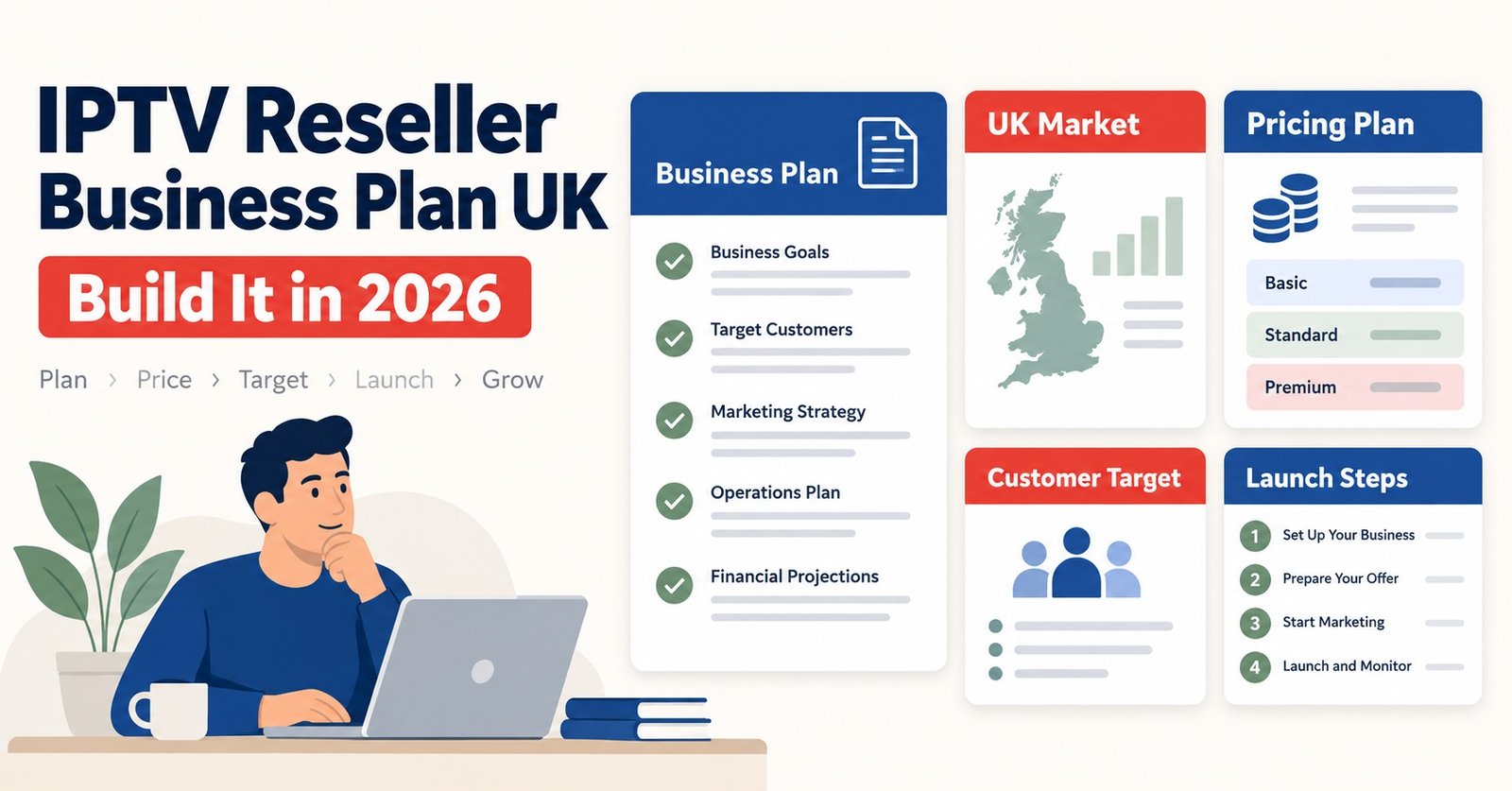
An IPTV reseller business plan UK founders can rely on has to start with numbers, not enthusiasm. Before choosing a supplier, naming a brand, or building a website, you need a working figure for your startup cost, your monthly overhead, your break-even customer count, and how much churn you can absorb without losing money. Most people skip this stage entirely and go straight to buying credits, which is exactly why so many stop trading within a few months.
Why Most IPTV Reseller Businesses in the UK Stall Within Six Months
The failure pattern is consistent enough to describe in advance. Someone buys a batch of credits, sets up a WhatsApp number, gets ten or fifteen customers through word of mouth, and feels like the business is working. Then a server has a bad week, three customers ask for refunds at once, and the reseller realises they never worked out what a refund actually costs against their margin. No spreadsheet, no plan, no idea whether the business was ever profitable in the first place.
This isn’t a technology problem. It’s a planning gap. The people who last two years or more in this business generally did the unglamorous arithmetic before their first sale, not after their first complaint.
IPTV Reseller Business Plan UK: The Six Numbers You Need Before You Spend Anything
Any credible IPTV reseller Panel business plan UK operators put together needs to answer six questions with actual figures, not guesses.
Startup cost. This covers your first batch of panel credits, a domain if you’re building a storefront, basic invoicing software, and a business bank account if you’re registering formally. Keep this figure honest. Underestimating it is the single most common planning mistake.
Cost per credit versus resale price. Your margin lives here. If a credit costs you £2 and you sell a one-month subscription for £8, your gross margin is £6 before you account for refunds, chargebacks, or free trial customers who never convert.
Monthly overhead. Support tools, any paid advertising, website hosting, and your own time if you value it properly. Many resellers forget to price their own hours, which makes the business look more profitable on paper than it actually is.
Break-even customer count. Divide your fixed monthly overhead by your margin per customer. This tells you the minimum number of paying subscribers you need before the business covers itself.
Churn assumption. IPTV subscriber churn is higher than most new resellers expect, particularly in the first three months of a customer relationship. Planning around a 0% churn rate is planning for a business that doesn’t exist.
Support time per customer. Every ticket, every “my app won’t load” message, every device-switch request costs time. Multiply your expected weekly support hours against what your time is worth, and compare that against your total margin.
| Planning item | Typical consideration | Why it matters |
|---|---|---|
| Startup cost | Credits, domain, invoicing tools | Underestimating this delays profitability |
| Margin per credit | Cost price vs resale price | Determines whether growth is sustainable |
| Break-even count | Overhead divided by margin | Shows the minimum viable customer base |
| Churn rate | Expected monthly customer loss | Affects real, not theoretical, revenue |
Pro tip: Build your break-even calculation using your worst realistic month, not your best one. If the business survives a bad month on paper, it can survive one in reality.

Legal Structure and Registration Belong at the Start, Not the End
A business plan that skips legal structure isn’t really a plan, it’s a hope. Decide early whether you’re operating as a sole trader or a registered limited company, since this affects tax, liability, and how seriously suppliers and customers take your operation. If you intend to work with an upstream provider, check that they’re properly registered too. UK-based providers should have a verifiable Companies House entry, and international providers should have an equivalent registration in their home country. This isn’t box-ticking for its own sake. It’s part of the same due diligence a customer might eventually run on you, and understanding how legalIPTV providers in the UK are actually assessed will shape how you present your own business.
Keep basic bookkeeping from day one. Invoices, payment records, and a simple ledger of credits bought versus subscriptions sold will save you hours later and matter if you ever need to demonstrate legitimate trading activity.
Choosing a Credit Supplier Without Getting Burned
Your business plan is only as reliable as the supplier underneath it. A cheap credit price that collapses into constant buffering complaints will cost you more in refunds and lost customers than a slightly more expensive, stable supplier ever would. Ask about backup infrastructure, request a trial during a genuinely busy evening rather than a quiet afternoon, and read the terms of service before committing any money. Suppliers who are vague about server setup or reluctant to answer direct questions are telling you something useful, even if they don’t mean to.
Pro tip: Request pricing for at least two tiers of credits before you commit. Suppliers who only offer one flat rate rarely have flexible enough infrastructure to grow with you.
Building Support Before You Have Customers to Support
New resellers often build the sales side of the business and treat support as an afterthought. This backfires quickly. Decide your support channels, your response time target, and your escalation process before your first customer signs up, not after the first complaint arrives. Even a simple structure, a dedicated WhatsApp or Telegram number with a documented turnaround time, is better than ad hoc replies from a personal phone number that also gets business enquiries.
Device compatibility questions make up a large share of early support tickets. Understanding common player-side issues in advance, including what typically goes wrong with IPTV player setups, means you can resolve half your tickets with a template answer instead of researching each one from scratch.
Pricing Without Racing Other Resellers to the Bottom
Undercutting every competitor on price is not a strategy, it’s a slow way to run out of margin. Price against your actual cost structure, not against the cheapest number you’ve seen advertised. A slightly higher price paired with faster support and clearer communication usually retains customers longer than the lowest price on the market, because most churn in this business comes from service frustration rather than pure price sensitivity.
Growth Without Losing Control of the Business
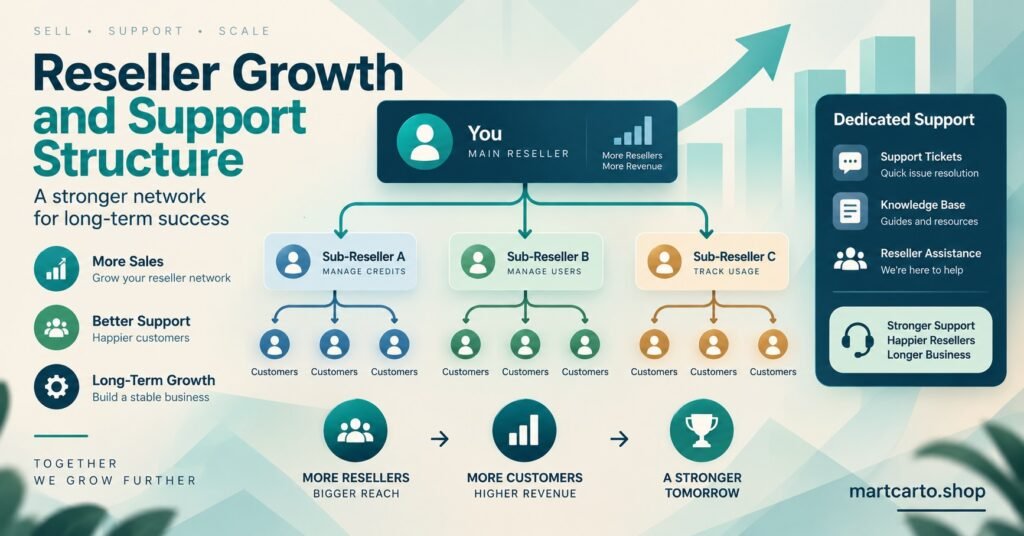
Once the core numbers work, growth usually means one of two paths: taking on more direct subscribers yourself, or bringing in sub-resellers who buy credits from you at a wholesale rate. Sub-reseller structures scale faster but introduce a layer of risk, since their customer service becomes your reputation whether you like it or not. If you go this route, set clear permissions, documentation, and support expectations from the outset rather than improvising them after a dispute. Reviewing how an established UK IPTV reseller panelstructures its own credit and dashboard system can give you a working reference point before you set your own terms.
IPTV Reseller Business Plan UK: Frequently Asked Questions
Do I need to register a company to start reselling IPTV in the UK?
It isn’t a strict legal requirement to trade as a limited company, but registering does affect your liability, tax position, and how suppliers and customers assess your credibility. Many resellers start as sole traders and register formally once volume justifies it.
How much should I budget to start?
This depends entirely on your credit costs and how many you buy upfront, but the more important number is your break-even customer count, not your starting budget alone. A small budget with a realistic break-even plan beats a large budget with no margin calculation.
What causes most reseller businesses to lose money?
Underpricing relative to true cost, ignoring support time as a real expense, and choosing an unstable credit supplier to save a small amount per credit. All three usually surface within the first few months.
Should I specialise in a niche audience or sell broadly?
Either can work, but niche audiences often have higher retention if you genuinely understand their needs, while broad targeting demands more marketing spend to stand out. Your plan should reflect which one matches your actual resources.
How do I know if my supplier is reliable before committing?
Request a trial during peak evening hours, ask specific questions about backup infrastructure, and check their business registration. Vague answers to direct questions are a warning sign worth taking seriously.
Conclusion
A workable IPTV reseller Panel business plan UK operators can trust isn’t built from optimism about customer numbers, it’s built from a break-even calculation, a legal structure, a vetted supplier, and a support process that exists before it’s needed. Get those four things right and the rest of the business, pricing, growth, sub-reseller decisions, becomes a lot easier to plan around. Start with the numbers, then build the rest of the plan on top of them.
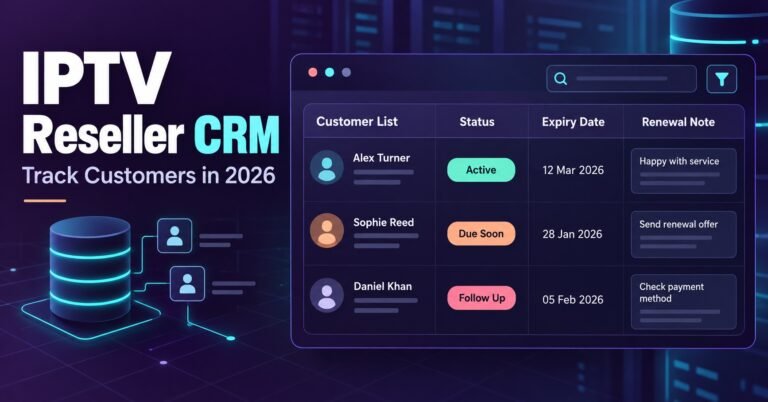
[…] are the part of a CRM that most UK IPTV panel resellers either skip entirely or fill with information nobody will ever reread. The useful version is short […]