
Book Appointment Now
IPTV Reseller Credit Forecasting Guide for Panel Owners 2026

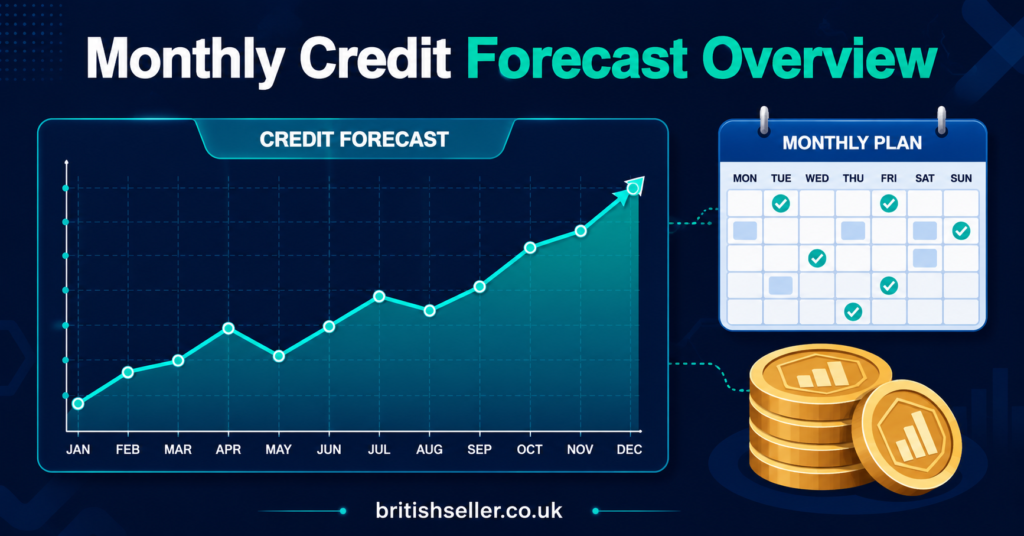
IPTV Reseller Credit Forecasting is the practice of predicting how many credits your panel will need each month, based on renewals, new signups and churn, so you buy enough to cover demand without tying up money in credits that sit unused. Most IPTV Panel resellers learn this the hard way, either running out mid-month and scrambling to top up while a customer waits, or buying far more than they use and watching cash sit idle in a panel balance. Getting the forecast roughly right, rather than perfectly right, is usually enough to fix both problems.
Why IPTV Reseller Credit Forecasting Matters Before You Scale
A reseller with ten active customers can get away with guessing. Renewals are infrequent enough that a manual top-up here and there covers the gap. That approach breaks down somewhere between thirty and eighty active lines, because renewals start overlapping, new signups arrive unpredictably, and a single missed top-up can mean two or three customers left without service on the same day.
The panel itself will not warn you in advance. Most credit-based systems simply show a balance, not a forward-looking view of what that balance needs to cover over the next fortnight. Forecasting fills that gap. It turns a reactive habit, buying credits when the balance looks low, into a planned one, buying credits because the numbers say you will need them.
The Four Numbers That Drive Every Credit Forecast
Every reasonably accurate forecast rests on the same four inputs. Skip one and the forecast drifts, sometimes by a small margin, sometimes by enough to cause a shortage.
- Active line count: how many subscriptions are currently live and drawing on your credit balance through renewals.
- Renewal cycle mix: whether your customers are mostly on monthly, quarterly, or annual terms, since this changes how evenly demand spreads across the year.
- Churn rate: the proportion of customers who do not renew, which reduces future credit demand but is easy to overestimate optimistically.
- Growth pipeline: new signups you reasonably expect, based on actual leads or a stable historical rate, not aspirational targets.
Treat growth pipeline with particular caution. It is the input resellers most often inflate, because it is the only one tied to ambition rather than existing customer behaviour. A forecast built on hoped-for growth rather than observed growth will consistently overbuy.
A Simple Method For Working Out Your Monthly Credit Need
You do not need a spreadsheet with dozens of variables. A working forecast can be built from three lines of arithmetic, updated monthly as your customer base shifts.
Start with renewals due. Count how many active lines are scheduled to renew in the coming month based on their subscription length. If you have 60 active monthly lines, that is 60 credits needed just to keep existing customers running.
Add expected new business. If your average month brings in eight to twelve new signups, use the middle of that range rather than the top, since new customer flow is naturally uneven.
Subtract expected churn. If roughly one in ten customers historically fails to renew, reduce your renewal figure accordingly rather than assuming full retention.
For a reseller with 60 monthly renewals, 10 expected new signups, and a 10 percent historical churn rate, the working figure lands around 64 credits for the coming month, not 70. That six credit difference across a year is the sort of gap that either sits as dead stock or forces an unplanned top-up, depending on which direction the guess errs.
| Forecasting Input | What It Tells You | Why It Matters |
|---|---|---|
| Renewals due | Guaranteed demand from existing customers | This is your floor, not your ceiling |
| New signup rate | Additional demand on top of renewals | Should reflect history, not hope |
| Churn rate | Demand that will not materialise | Ignoring it inflates every forecast |
Pro tip: Recalculate your forecast on the same date each month rather than whenever the balance looks low. A fixed schedule catches drift before it becomes a shortage.
Where Resellers Get Their Forecasts Wrong
The most common error is forecasting from the current balance rather than from actual demand. A reseller looks at 200 credits sitting in the panel, assumes that is plenty, and stops thinking about it until the number drops noticeably. That balance tells you nothing about whether 40 renewals are due in the next ten days.
A second mistake is ignoring the lumpiness of annual subscriptions. A handful of customers who all signed up in the same launch month will all renew in the same month a year later. If that cluster is not tracked separately, it produces a sudden spike in credit demand that a flat monthly average will not predict.
A third mistake, common among newer IPTV Panel resellers, is treating every month as identical. Demand for IPTV subscriptions genuinely varies across the year, and a forecast that does not account for that will be wrong in a predictable direction every single time.
Seasonal Demand And Why Flat Forecasting Fails
Signup and renewal activity tends to rise around major shifts in the sporting and entertainment calendar, when households reassess what they are paying for and how they want to watch it. It also tends to rise slightly after Christmas, when new devices get set up, and dip during the summer months when households spend less time indoors.
None of this needs to be tracked with scientific precision. What matters is noticing your own pattern over two or three cycles and adjusting the growth pipeline figure up or down accordingly, rather than applying the same flat number in July that you applied in January.
Reseller And Sub-Reseller Forecasting Are Not The Same Job
A reseller buying credits directly manages the full forecast: renewals, new business, churn, and seasonal variation, all against their own capital.
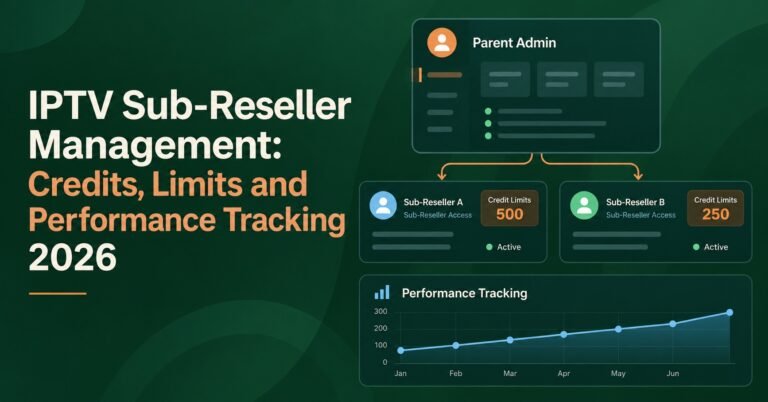
A sub-reseller works inside a parent account’s credit allocation, which changes the calculation. Forecasting still matters, but the constraint is often the parent’s willingness to top up quickly, not just your own cash flow. A sub-reseller who forecasts a spike two weeks out and flags it early to their parent reseller avoids the awkward situation of asking for an emergency top-up on the day a customer expects activation.
Pro tip: If you operate as a sub-reseller, share your renewal calendar with your parent account monthly. It turns a reactive request into a planned one on both sides.
Building A Buffer Without Overbuying
A small buffer, typically enough to cover three to five unexpected activations, protects against the gap between forecast and reality without tying up excessive capital. The buffer should shrink or grow slightly as your forecasting accuracy improves. A reseller who has tracked their numbers for six months and consistently lands within a few credits of their forecast needs a smaller safety margin than someone still building that history.
Where forecasting and renewal timing intersect most directly is in how consistently you contact customers before their line expires. Resellers who have worked through structured renewal reminder timing tend to see fewer surprise non-renewals, which in turn makes churn easier to predict and the whole forecast more reliable.
Credit Forecasting Checklist
- Count active lines and confirm how many renew in the next 30 days
- Separate annual subscriptions into their own renewal calendar to catch clustering
- Use a rolling average of the last three months for new signup estimates
- Apply a realistic churn percentage based on actual history, not a guess
- Recalculate on a fixed date each month rather than reactively
- Keep a small buffer sized to your forecasting accuracy, not a flat guess
- Flag upcoming spikes early if operating as a sub-reseller
Resellers building out their onboarding process alongside this will find that a consistent first-hour setup routine reduces early cancellations, which is itself a variable worth folding into your churn assumption over time.
Frequently Asked Questions
How often should I update my credit forecast?
Monthly is usually sufficient for most reseller businesses. Weekly reviews only make sense once you are managing more than roughly 150 active lines, where renewal clustering becomes harder to track by memory alone.
What if my actual usage keeps overshooting the forecast?
Check whether annual renewals are clustered in a month you have not accounted for, and whether your new signup average includes an unusually strong month that is skewing the figure upward.
Should I buy a large batch of credits to get a better rate, even if I do not need them yet?
Only if the discount genuinely outweighs the cost of tying up that capital for weeks or months. Run the forecast first, then decide whether the volume discount changes the answer.
Does automation software replace the need to forecast manually?
Automation tools can track renewal dates and flag upcoming demand, which removes a lot of manual counting, but someone still needs to interpret the trend and decide how much to buy. Reviewing how renewal and usage tracking tools handle this is worth doing once your line count grows past what a spreadsheet comfortably manages.
Is credit forecasting different for a white label panel?
The underlying maths is the same. The main difference is that white label operators sometimes have less visibility into upstream credit pricing changes, which is worth checking directly with whoever supplies the panel, such as the plans listed on britishseller.co.uk’s reseller credit pricing page.

Getting IPTV Reseller Panel Credit Forecasting right is less about precision and more about consistency. A forecast built from four honest inputs, renewals due, new business, churn, and a sensible seasonal adjustment, will keep most resellers within a small margin of error month after month. The businesses that struggle are usually the ones treating their credit balance as the forecast itself, rather than treating the balance as the outcome of one. Start with a single monthly calculation, track how close it lands against actual usage, and adjust the buffer size as your own numbers prove themselves out.


[…] it helps to understand the basic economics behind what you’re tracking. Reading through how IPTV Panel reseller profit margins actually work makes it clearer why chasing a renewal is almost always worth more […]