
Book Appointment Now
IPTV Sub-Reseller Management: Credits, Performance 2026
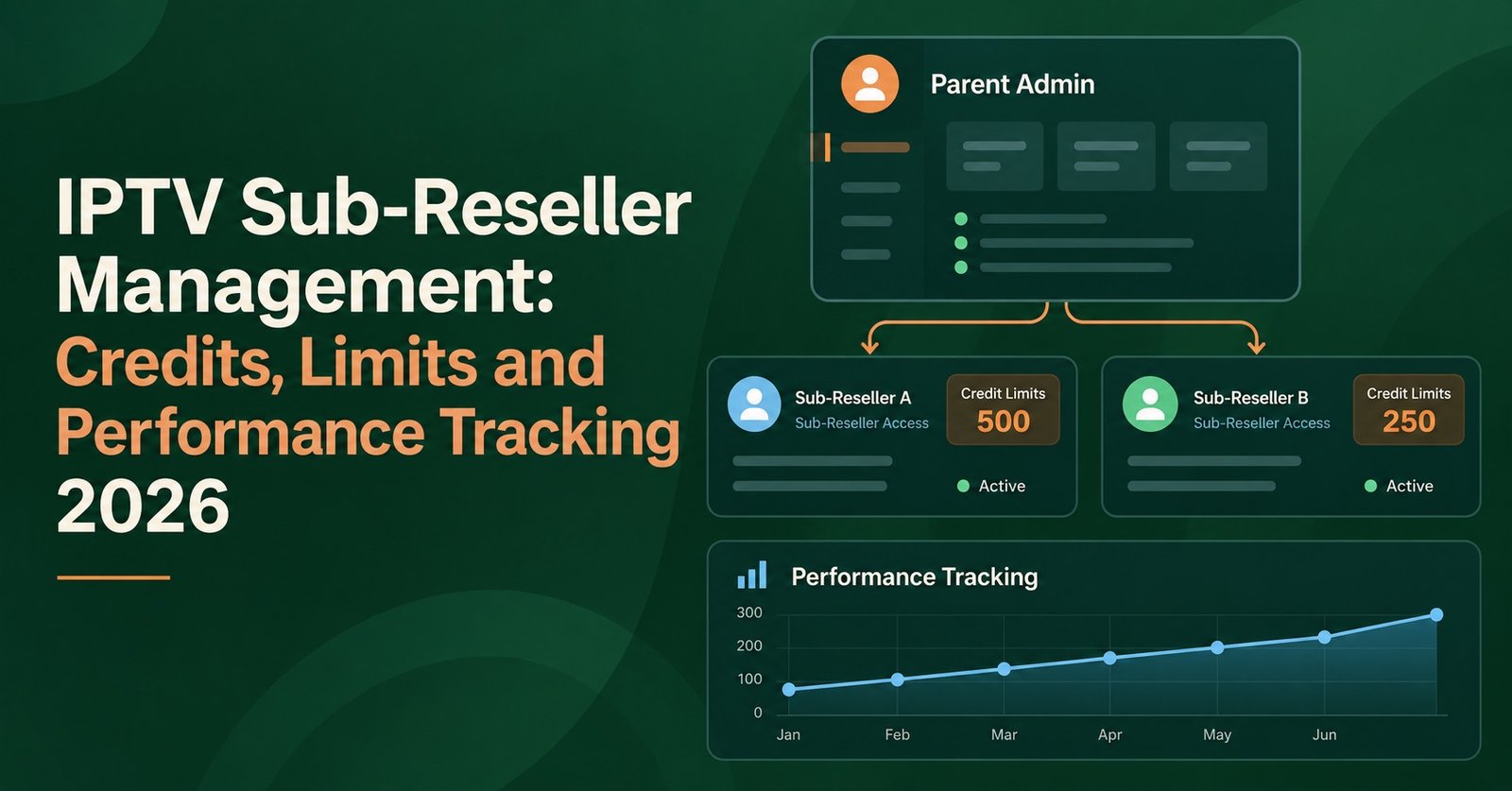
IPTV sub-reseller management comes down to three practical controls: how much credit a partner account holds, what that account is permitted to do, and whether its customers are still active thirty days later. Everything else is process wrapped around those three things. Once you start supplying other sellers rather than end viewers, your role changes from selling subscriptions to running a small supply chain, and the accounts that quietly cost you money are nearly always the ones nobody looked at for six weeks. This guide covers the controls worth setting on day one, the numbers worth watching monthly, and the point at which an underperforming partner should be restricted rather than tolerated.
The Three Levers You Actually Control
A sub-reseller sits beneath your account and draws from your credit balance. That relationship gives you less authority than people expect and more than they use.
You cannot control how they price, how they advertise, or how they speak to their customers. What you can control sits inside the panel itself, and it is worth knowing the boundary precisely before you promise a partner anything.
Credit supply
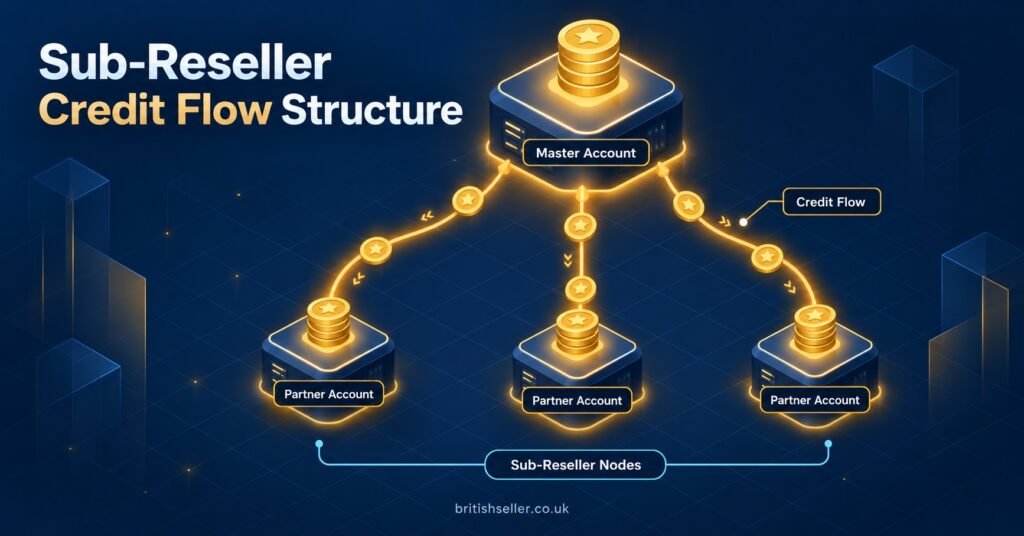
This is the strongest lever by a wide margin. A sub-reseller can only create what their balance allows, so the size and frequency of your top-ups effectively sets the ceiling on their business. Handing someone a large balance in one transfer removes your ability to pause the relationship without an argument.
Account permissions
Most IPTV panel reseller systems let you restrict what a sub-account can do: which subscription durations they may create, whether they can generate trial lines, how many trials per day, whether they can create accounts of their own beneath them. These settings are usually configured once and forgotten, which is exactly why they get abused.
Visibility of line activity
You can see what they create. Line creation dates, durations, expiry, renewal, and in many panels the connection status of each line. This is your only honest source of information about whether a partner is building a customer base or churning through one.
Pro tip: Write down which of these three levers your panel actually exposes before you recruit your first sub-reseller. Panels vary considerably, and discovering mid-dispute that you cannot restrict trial generation is an expensive way to learn.
Structuring Credit Allocation So You Are Not Funding Someone Else
The single most common mistake in this layer is treating sub-resellers like trusted staff instead of trade customers. A partner asks for credits, promises to pay at the end of the month, and you top them up because the relationship feels friendly. Two months later they owe you a balance they cannot clear, and their customers are live on lines you paid for.
Prepaid is the default for a reason. Credits leave your balance only after their payment clears in your account. It sounds inflexible, and new partners occasionally push back, but it removes the entire category of problems that destroys this business model.
If you do want to offer flexibility, offer it in a shape you can withdraw. A modest float that resets monthly, or slightly better per-credit pricing at higher volumes, both reward good partners without exposing you. Volume discounting is the cleaner incentive of the two because it costs you nothing when a partner underperforms. Your own supply cost sets the floor here, and it is worth understanding how reseller costs and renewals shape your margin before you decide what you can afford to give away.
Top-up cadence matters more than top-up size. A partner buying 40 credits weekly is easier to read than one buying 200 credits every five weeks, because weekly purchasing tells you their sales are steady. When a regular buyer suddenly goes quiet, you know within days rather than at the end of a quarter.
IPTV Sub-Reseller Management: Setting Limits Before You Need Them
Limits applied after a problem appears feel like punishment. The same limits applied at account creation feel like policy. Set them at the start.
Four settings are worth deciding deliberately.
Trial generation. Trials sell subscriptions, so blocking them entirely damages a legitimate partner. A daily cap does not. Unlimited trial creation on a sub-account is the fastest route to your server capacity being consumed by lines that will never convert.
Maximum line duration. A new partner creating twelve-month lines is spending your credits a year ahead of any evidence they can support those customers. Restricting new accounts to shorter durations for the first month or two is reasonable, and easy to lift once they have proved themselves.
Sub-account creation. Whether your partner may create their own layer beneath them is a genuine business decision, not a technical one. Each layer down reduces your visibility and your margin, and increases the number of people who can damage your reputation using lines you supplied. Most operators should keep this switched off until a partner has a track record.
Package scope. If your supply includes premium tiers at a higher credit cost, decide explicitly whether sub-resellers can access them. Partners who do not understand the cost difference will burn credits they did not budget for and then ask you to absorb it.
None of this needs to be hostile. Send the limits as a short account summary when you activate them, framed as what the account includes rather than what it forbids. Partners who have run accounts elsewhere will recognise it as normal trade practice.
What to Track, and How Often
Sub-reseller reporting varies enormously between panels. Some show detailed line histories, others show a credit balance and little else. Where the panel gives you nothing, a simple spreadsheet updated fortnightly does the job.
Three signals carry most of the information.
| Signal | What it tells you | Act when |
|---|---|---|
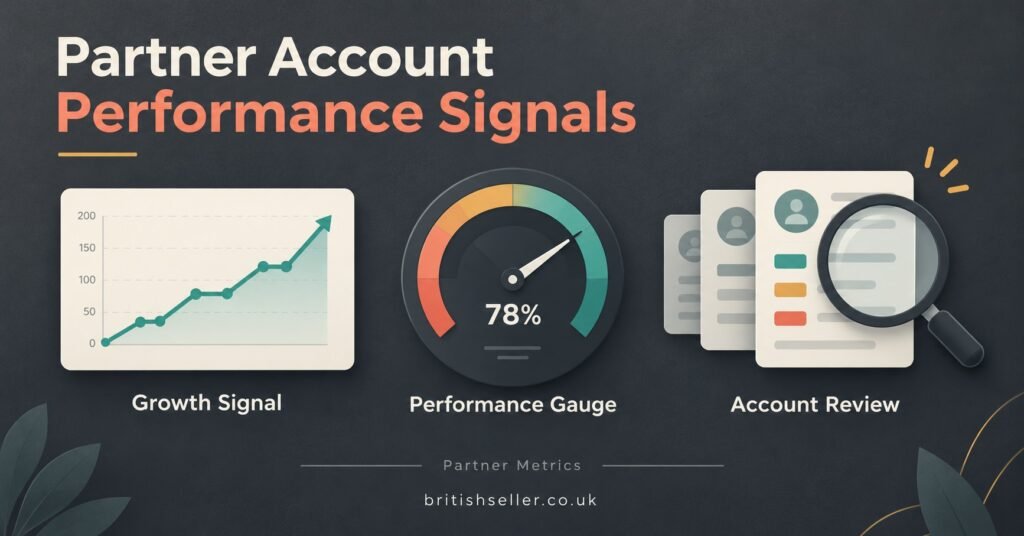
| Renewal rate on their lines | Whether their customers are actually satisfied | Renewals fall well below your own for two cycles |
| Credit burn versus active lines | Whether credits are becoming customers or waste | Balance drops while active line count stays flat |
| Trial-to-paid conversion | Whether trials are a sales tool or a leak | Trial volume rises with no matching line creation |
Renewal rate is the one that predicts the future. A partner whose customers leave after the first month will eventually stop buying credits, and the drop-off usually shows in their renewals a month before it shows in their purchasing. That gap is your window to intervene while the relationship is still worth saving.
Credit burn against active lines catches the second pattern: credits spent on lines that were created, tested, abandoned, or handed out free. Occasional waste is normal. A consistent gap is a partner who does not understand that each credit has a cost.
Pro tip: Check partner accounts on the same date each month rather than when something feels wrong. Regular review catches gradual decline; reactive review only ever catches disasters.
Warning Signs Worth Taking Seriously
Some patterns look like growth and are not.
A sudden jump in volume from a partner who has been steady for months deserves a conversation, not just a top-up. It may be a genuine bulk deal. It may also be someone who has undercut the market severely and acquired customers who will leave the moment service quality is tested.
Support requests arriving directly from a partner’s customers mean your partner has given out your contact details or your branding is visible where it should not be. Fix the routing before you fix the individual complaint, because the pattern will repeat.
Repeated requests to reduce credit pricing without any increase in volume usually signal that the partner’s own pricing is too thin to survive. Cutting your rate to rescue their model transfers their problem to you.
Finally, watch for partners who cannot answer basic questions about their own customer base. Someone who does not know their renewal rate is not tracking their business, and untracked businesses do not scale. Anyone entering this layer should already have the fundamentals in place, which is worth reviewing against the practical requirements for running a UK reseller operation.
Deciding Between Coaching, Restricting and Ending the Relationship
Not every underperforming account should be closed. Most fall into one of three categories, and the correct response differs.
Partners with weak sales but clean operations usually need help rather than restriction. Share what works: pricing that holds up, simple setup instructions for customers, realistic expectations about device compatibility. A partner who improves is worth more than a replacement you have to train from zero.
Partners who consistently overspend credits or ignore agreed limits should be restricted rather than removed. Lower their permitted durations, reduce their float, cap trials harder. If behaviour improves, restore the settings. This is a normal trade response and most partners accept it without drama.
Partners who damage your reputation are a different case. Chargebacks, misrepresenting what the service includes, dumping their support burden on you, or promising customers things the service does not deliver. These relationships should end, and they should end in an orderly way.
Orderly means deciding the customer question before you act. Suspending a sub-account typically leaves their existing lines running until expiry, which gives everyone a defined wind-down period. Ending an account while lines are live creates end-viewer complaints that will reach you rather than them. Agree in writing at the start what happens to active lines if the relationship ends, because the argument is unwinnable once it starts.
Growing the Layer Without Losing Control
Two or three partners can be managed by memory. Ten cannot. The transition point catches most operators by surprise because nothing breaks suddenly; the quality of your attention just thins out until a problem you would have spotted in month two surfaces in month seven.
Documentation is what carries you across that point. A one-page account summary covering credit pricing, top-up process, permitted durations, trial allowance, support routing and wind-down terms answers most partner questions before they are asked and removes the ambiguity that causes disputes. Sending the same document to everyone also stops the slow drift into fifteen slightly different private arrangements.
Tiering helps at larger numbers. Grouping partners by monthly volume and applying different pricing and permission sets to each tier gives you a defensible reason for every rate you quote, and it gives partners a visible reason to grow. If your supply arrangement includes a credit threshold that unlocks sub-reseller selling, your own tiers should sit comfortably inside whatever the IPTV reseller plan structure allows.
Be honest about the ceiling. This layer earns a margin per credit rather than a full subscription price, which means the income depends on partner volume staying consistent. Ten stable partners are worth considerably more than twenty who buy once and disappear, and recruitment alone never fixes a retention problem.
Pro tip: Keep a dated note against each partner account recording every pricing exception, limit change and complaint. When a partner disputes what was agreed eight months ago, that file is the difference between a short conversation and a lost relationship.
Frequently Asked Questions
What is the actual difference between a reseller account and a sub-reseller account?
A IPTV panel reseller account draws credits directly from the supplier and typically sells to end viewers. A sub-reseller account sits beneath a reseller, draws credits from that reseller’s balance, and operates under their permissions. The sub-reseller’s supplier relationship is with you, not with the panel provider, which means their problems become your support load.
Should I let sub-resellers set their own prices?
You generally cannot stop them, so treating pricing as their decision is realistic. What you can influence is the per-credit rate you charge and the volume tiers attached to it. If a partner is pricing so low that they cannot fund support, that shows up as complaints and churn long before it shows up as a pricing conversation.
How many credits should a new sub-reseller start with?
Enough to test the service properly and serve their first customers, and no more. Small opening allocations with frequent top-ups give you a faster read on whether they are selling, and they limit your exposure if the relationship does not work out. Larger allocations are a reward for a proven pattern, not an opening offer.
Who owns the customer if a sub-reseller stops trading?
In practice, whoever holds the customer’s contact details. You hold the line data; they hold the relationship. This is the single most useful thing to agree in writing before an account is created, including whether you may contact their customers directly if their account closes with lines still active.
Can sub-resellers create their own sub-resellers?
Some panels allow it, and whether you permit it is your decision. Each additional layer reduces your margin, reduces your visibility of who is actually serving the end viewer, and increases the chance of service being misrepresented several steps down. Most operators are better served keeping the structure to one layer until a partner has a long track record.
What happens to active customer lines if I suspend a partner account?
This depends entirely on your panel. Some systems leave existing lines running to their expiry date while blocking new creation; others suspend everything immediately. Confirm which behaviour yours has before you ever need to use it, because the two outcomes produce very different Saturday evenings.
Bringing It Together
Effective IPTV sub-reseller management is mostly a matter of deciding your controls early and reviewing them on a schedule rather than on instinct. Set credit supply as prepaid, apply trial and duration limits at account creation instead of after a problem, and check renewal rate and credit burn on a fixed date each month. Those habits catch nearly every issue in this layer while it is still small enough to fix with a conversation.
The honest limitation is that your influence stops at the panel boundary. You cannot make a partner sell well, price sensibly or support their customers properly. What you can do is make sure a partner who does none of those things cannot spend much of your money before you notice.
If you are setting up your first partner account this week, start by writing the one-page account summary. Getting the terms clear on paper before anyone has credits is the cheapest work you will ever do in this business.
Sub-Reseller Account Checklist
- Confirm which permissions your panel actually lets you restrict on a sub-account
- Set credit supply to prepaid unless there is a specific reason not to
- Cap daily trial generation before the account goes live
- Restrict maximum line duration for the first month or two
- Decide explicitly whether the partner may create accounts beneath them
- Agree in writing what happens to active lines if the relationship ends
- Route end-viewer support to the partner, not to you
- Record renewal rate and credit burn on a fixed monthly date
- Keep a dated note of every pricing exception and limit change
- Review tier placement whenever a partner’s volume changes materially
[…] part of the same due diligence a customer might eventually run on you, and understanding how legalIPTV providers in the UK are actually assessed will shape how you present your own […]