Book Appointment Now
IPTV for International Football Matches: 2026 Ultimate Guide
IPTV for International Football Matches: How It Works in 2026
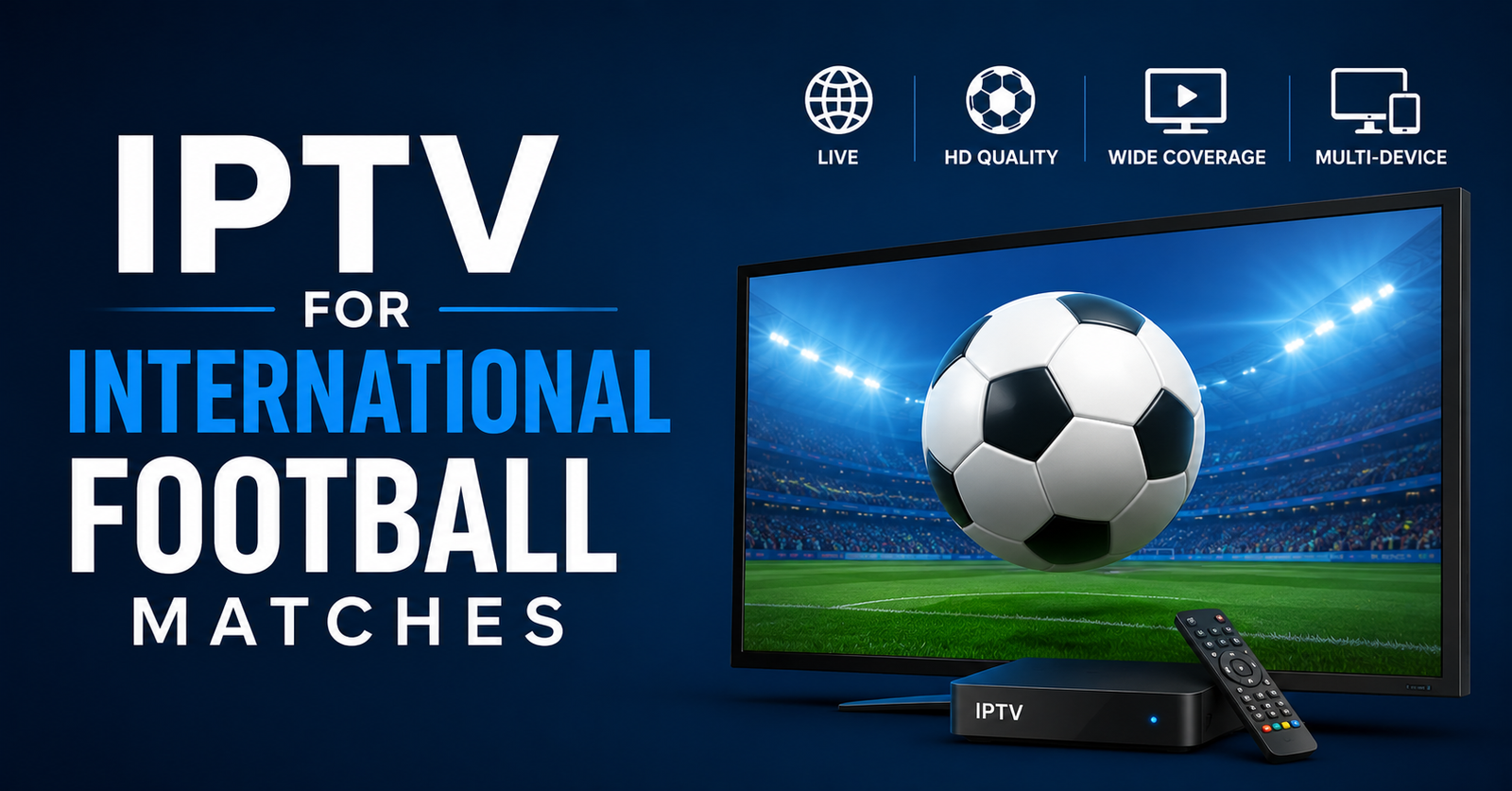
IPTV for international football matches is a way of delivering football streams over a normal internet connection instead of through a satellite dish or cable line, the match arrives the same way a video on your phone does, as data packets sent to an app on your TV, Firestick, or mobile. That is the whole idea in one sentence. The complicated part is not the technology, it is everything around it: where the streams come from, who is allowed to show what, and how the reseller side of the business actually functions. This guide walks through all of it in plain language, and it is honest about the parts that sit in a legal grey zone rather than pretending those parts do not exist.
If you are reading this because you want to run a streaming business rather than just watch, the operational side is where your real attention belongs. The watching part is simple. The selling part has rules, costs, and risks that most beginner guides skip over entirely.
Why IPTV for International Football Matches Became So Popular
Football is the single biggest driver of streaming demand on the planet, and international fixtures are the peak of that demand. A regular league weekend pulls a steady crowd, but a major international tournament pulls everyone at once, including people who never watch football the rest of the year. That spike in interest is exactly why so many viewers go looking for alternatives to traditional broadcasters.
The appeal is mostly about access and cost. A single household might need three or four separate subscriptions to follow every competition through official channels, because rights are split between different broadcasters in different countries. People find that frustrating and expensive. IPTV grew into that gap by promising one app, one login, and a long channel list, which is genuinely convenient even before you factor in price. The convenience is real. Whether a given service is operating legally is a separate question, and we will get to it.
What You Actually Need to Watch IPTV for International Football Matches
The hardware list is short and most people already own everything on it. You need a stable internet connection of roughly 25 Mbps or more for smooth high definition, a device to watch on, and an app that can read the stream. That is it. The device can be a Smart TV, an Android TV box, a Firestick, a phone, or a laptop.
The app is where people get confused, so here is the simple version. Most services hand you either an M3U link or a set of Xtream Codes login details. An M3U link is basically a long web address that contains your whole channel list. Xtream Codes is a username and password that the app uses to pull the same list. Either way, you paste the details into a player app once and the channels appear. There is no installation drama beyond that initial setup, which is why providers can promise activation in minutes.
Pro Tip: Before committing to any service, test it during a busy period, not a quiet afternoon. A stream that looks perfect at 2pm on a Tuesday tells you nothing about how it holds up when thousands of people log in for a big international fixture at the same moment. Peak-time stability is the only test that matters.
The Legal Grey Area Nobody Wants to Explain Clearly
This is the part most guides avoid, so let us be straight about it. The technology behind IPTV is completely legal. Sending video over the internet is what every streaming platform on earth does. The question is never the technology, it is the content and who holds the rights to it.
Live football is sold to broadcasters region by region for large sums of money. When a service streams those same matches without paying for the rights, that stream is unlicensed, and accessing it can break copyright law depending on where you live. The grey area exists because the systems and panels that deliver streams are neutral tools, while the streams flowing through them may or may not be properly licensed. A panel is a bit like a delivery van. The van is legal. What someone chooses to load into it is a different matter entirely.
For anyone building a business in this space, that distinction is not a technicality you can wave away. It shapes your risk, your reputation, and your long-term stability. Honest operators acknowledge it openly. If a provider promises you every premium match in the world with zero mention of rights or copyright, treat that silence as a warning rather than a feature.
Where to Watch International Football Through Official Broadcasters
The straightforward and fully legal route is to follow the official broadcaster for your region. Major tournaments are always sold to one or more licensed broadcasters in each country, and those broadcasters stream the matches through their own apps and websites. The downside is cost and fragmentation, since you may need more than one subscription. The upside is that the streams are reliable, in full quality, and you are never breaking any rules.
A practical habit is to check the tournament’s official website before kick-off, because they publish the list of licensed broadcasters by country. From there you go directly to whichever broadcaster covers your region. It is less exciting than a single all-in-one app, but it is the only approach with zero legal risk, and for a lot of viewers that peace of mind is worth the extra effort and money. If your goal is simply to watch a final without any worry, this is the route.
How the Reseller Side of IPTV for International Football Matches Works
Now for the business side, which is where most of the money and most of the questions actually sit. A reseller does not own any servers or create any streams. A reseller buys credits from a panel supplier, and each credit converts into one subscription for one customer for a set period, usually a month. You buy in bulk at a low per-credit cost, sell to your customers at a higher price, and the difference is your profit.
The panel is your control desk. From one dashboard you create customer accounts, set how long each subscription lasts, renew lines, and watch which ones are active. You never touch the underlying infrastructure. Whoever supplies your panel handles the servers, the failover, and the technical heavy lifting, while you handle customers and pricing. This separation is the whole reason reselling is accessible to people with no technical background. If you want to compare how different starter packages are structured, the IPTV reseller panel plans page lays out the typical credit tiers side by side.
The economics are simple to grasp. Suppose you buy credits at roughly a pound each and sell monthly subscriptions for several pounds. Each customer is a small recurring margin, and the model only becomes interesting when you have enough customers for those small margins to stack into something meaningful. There is no shortcut. Volume is the entire game.
Subscriber, Reseller and Sub-Reseller: Who Sits Where
The ecosystem has three layers and people mix them up constantly, so here is the clean version in a table.
| Role | What They Do | How They Pay |
|---|---|---|
| Subscriber | Watches the streams. The end customer. | Pays the reseller a monthly or yearly fee |
| Reseller | Buys credits, creates and manages customer accounts | Pays the panel supplier per credit, in bulk |
| Sub-reseller | A smaller reseller supplied by a larger one | Buys credits from the reseller above them |
The sub-reseller layer is what lets the business scale beyond your own direct customers. Once a reseller reaches a certain credit volume, they can bring other smaller resellers underneath them and supply those people with credits. Instead of only selling to viewers, you start selling to other sellers, and you take a small margin on every credit they buy. That is how a one-person operation grows into something that earns while you sleep, because your sub-resellers are out finding their own customers.
Pro Tip: Do not jump straight to building a sub-reseller network. Master direct selling first. Managing customers teaches you the support patterns, the common complaints, and the renewal rhythms you will need to understand before you can sensibly support resellers beneath you. Walk before you run.
What Separates a Reliable IPTV for International Football Matches Panel from a Bad One
Not all panels are equal, and the difference shows up most painfully during exactly the moments that matter for football: big international fixtures when everyone logs on at once. A weak panel buckles under that load and your customers flood you with complaints during the one match they cared about most. A strong panel barely notices.
The features worth checking are concrete, not marketing fluff. You want multiple backup servers with automatic failover, so that if one server fails another takes over in seconds without your customers noticing. You want an accurate electronic programme guide, the on-screen listing that shows what is on now and next, because nothing makes a service feel cheap faster than a wrong or empty guide. You want instant automatic delivery, so a new customer gets their login the moment they pay rather than waiting on you. And you want clear tools to monitor stream health, so you spot a failing channel before your customers do. For a deeper breakdown of how panel infrastructure is built and maintained, the supplier’s IPTV reseller news and guides section is a useful reference point.
The uptime claim matters more than any channel count. A panel advertising forty thousand channels means nothing if half of them stall during peak demand. Stability beats quantity every single time, and any experienced reseller will tell you the same thing.
Pricing Models Resellers Use for IPTV for International Football Matches
How you price determines whether your business actually works, and there are three common structures. Each suits a different kind of customer, so understanding the trade-offs is worth a few minutes.
| Plan Type | Best For | Trade-off |
|---|---|---|
| Monthly | New customers testing the service | Lower commitment, higher churn |
| Quarterly | Customers who are fairly sure | Balanced cash flow and retention |
| Yearly | Committed long-term customers | Big upfront cash, hardest to sell cold |
Most experienced resellers lean toward yearly packages because they bring in cash immediately and lock the customer in, which slashes the churn that eats into a monthly-only business. The catch is that a yearly plan is a harder sell to someone who has never used your service, because you are asking for a lot of trust upfront. A sensible middle path is to start a nervous customer on monthly, prove your reliability over a few weeks, and then offer a discount to upgrade them to yearly once they trust you. That sequence converts far better than leading with the big number.
Pro Tip: Build your pricing around tournament timing. Demand for football streaming spikes hard around major international events and goes quiet between them. Offering a well-timed yearly deal just before a big tournament captures customers at the exact moment their motivation to buy is highest. Timing your offers to demand is one of the easiest wins available to a reseller.
Common Problems With IPTV for International Football Matches and How Resellers Handle Them
Every reseller faces the same handful of complaints, and how you handle them is the difference between a customer who stays and one who leaves a bad review. The most common issue is buffering, where the stream keeps pausing to load. Nine times out of ten this is the customer’s own internet rather than your service, so your first move is always to check their connection speed before assuming the panel is at fault.
The second recurring problem is a single channel going down while everything else works. This usually points to a source issue on that specific channel rather than a problem with the customer’s account, and a good panel lets you see channel health from your dashboard so you can confirm it quickly. The third is login trouble, which is almost always a mistyped username or an expired subscription that simply needs renewing. None of these are dramatic once you have seen them a few times. The skill is staying calm, having a quick checklist, and responding fast, because speed of support is what customers actually remember. If you are weighing up which supplier gives you the tools to diagnose these issues cleanly, comparing options like gbreseller.co.uk alongside other IPTV Reseller panels is a reasonable way to judge the support and monitoring features on offer, treating each as one example among several rather than a guaranteed pick.
Building Trust as an IPTV for International Football Matches Reseller
Trust is the entire foundation of a reselling business, because you are asking people to pay you for something they cannot hold in their hand. The operators who last are the ones who behave like a proper business from day one. That means issuing a clear receipt or invoice for every sale, confirming payment before you activate an account, and keeping organised records of who bought what and when.
It also means honest communication. If a server has a wobble during a big match, telling your customers what is happening and when it will be fixed keeps them on side far better than going silent and hoping they do not notice. Customers forgive the occasional hiccup from a service that communicates. They do not forgive being ignored. Professionalism is not about fancy branding, it is about reliability and straight dealing, and it compounds over time as your reputation spreads by word of mouth. In a market with plenty of fly-by-night operators, simply being consistent and contactable makes you stand out more than you would expect.
Conclusion
IPTV for international football matches comes down to a simple core idea wrapped in a more complicated business and legal reality. The streaming itself is just video over the internet, easy to set up and convenient to use. The reseller model on top of it is a credit-based business where you buy in bulk, sell at a margin, and grow through volume and trust rather than any technical wizardry. What you should carry away is that the technology is neutral and legal, while the content is where the real questions live, and any honest guide to IPTV for international football matches has to say so plainly rather than pretending the grey area is not there. If you watch through official broadcasters you carry zero legal risk. If you build a reselling business, build it on reliability, clear records, and straight communication, because those are the things that turn a few customers into a lasting income. Get the foundations right and the rest follows.
Quick-Start Checklists by Role
Subscriber Checklist
- Confirm your internet speed is at least 25 Mbps for smooth high definition
- Decide your device first: Smart TV, Firestick, Android box, phone, or laptop
- Ask whether you are getting an M3U link or Xtream Codes login
- Test the service during a busy period before committing money
- Check the tournament’s official site for the legal broadcaster in your region if you want zero risk
Reseller Checklist
- Test panel stability during peak hours, not quiet ones
- Buy a small starter batch of credits before scaling up
- Set clear monthly, quarterly, and yearly pricing tiers
- Set up reliable payment methods and issue an invoice for every sale
- Keep organised records of every customer and renewal date
- Respond fast to support questions with a simple troubleshooting checklist
Sub-Reseller Checklist
- Master direct customer selling before recruiting anyone beneath you
- Reach the credit volume your supplier requires to unlock sub-reseller access
- Decide your per-credit margin on the resellers you supply
- Give your sub-resellers basic setup and support guides so they need less hand-holding
- Track which sub-resellers are active and which are stalling
- Reinvest a portion of earnings into more credits to grow steadily
Frequently Asked Questions
Is IPTV for international football matches legal?
The technology is fully legal. The legality depends entirely on whether the specific streams are properly licensed. Following official broadcasters carries no legal risk, while accessing unlicensed streams can break copyright law depending on your location.
Do I need technical skills to resell IPTV?
No. The panel handles all the technical infrastructure. Your job is managing customers, setting prices, and providing support, none of which requires coding or server knowledge.
How much internet speed do I need to watch football streams?
Around 25 Mbps or more is recommended for smooth high definition during live matches. Slower connections may cause buffering, especially during busy periods.
What is the difference between a reseller and a sub-reseller?
A reseller buys credits from a panel supplier and sells to viewers. A sub-reseller is a smaller seller who buys credits from a reseller above them rather than directly from the supplier.
Why does my stream buffer during big matches?
Usually it is either your own internet connection struggling, or a weak panel buckling under peak demand when many people log in at once. Testing during busy periods before you commit helps you avoid the second problem.