Book Appointment Now
HD IPTV Headend Encoder Box: Is Self-Encoding Worth It? 2026
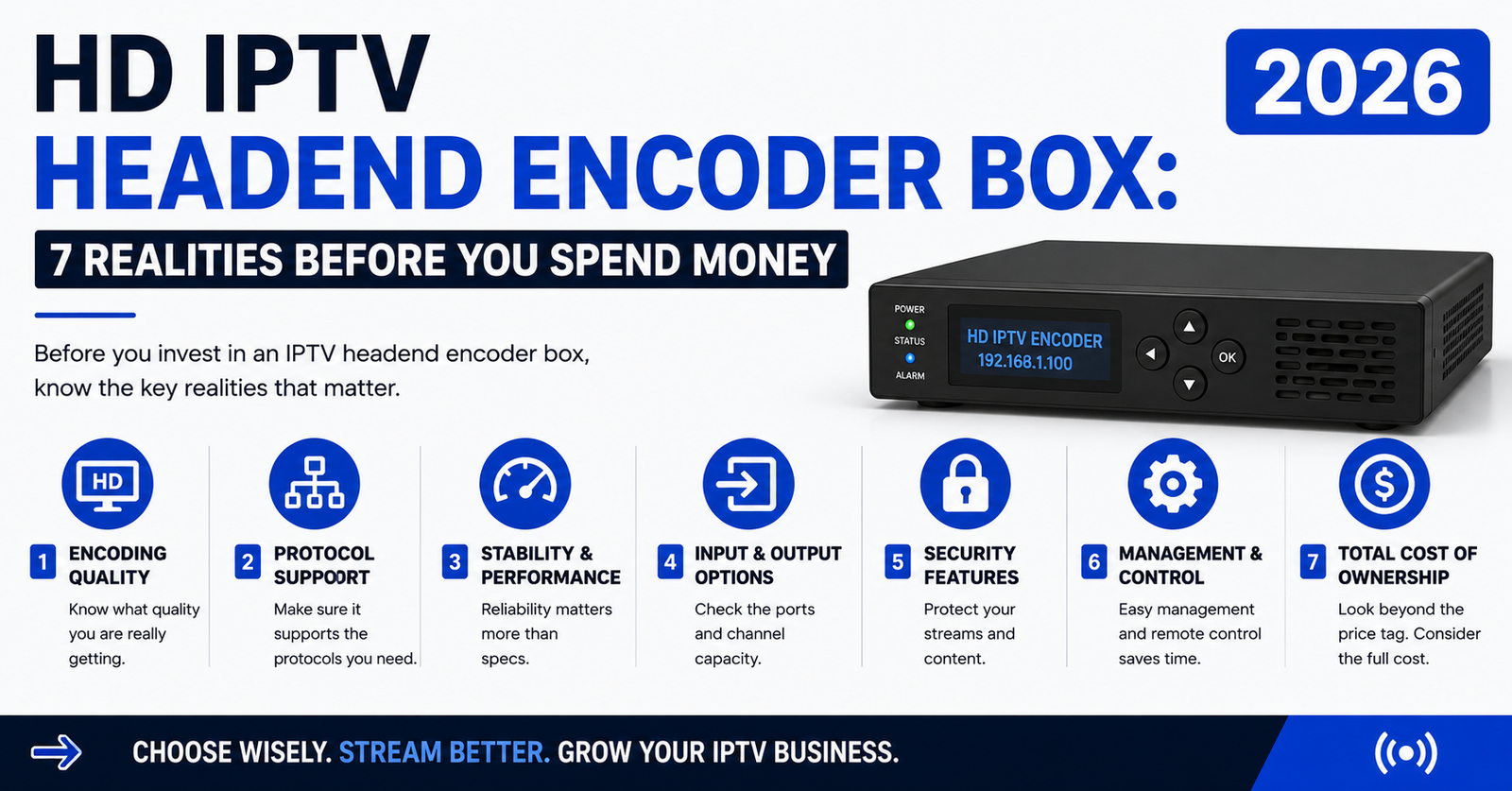
Somewhere between a hardware spec sheet and a Reddit thread full of regret sits the HD IPTV headend encoder box, a piece of kit that sounds like the ultimate power move for anyone looking to build a serious IPTV operation. You picture yourself running your own streams, controlling quality, answering to nobody. The reality, though, is a lot messier than the product listing suggests. Most people searching for an H.265 IPTV HD IPTV headend encoder box are aspiring resellers who believe owning the hardware means owning the business. That assumption has cost more people money than buffering ever has.
This article breaks the whole thing open. Not from a blogger’s chair, but from the UK IPTV reseller trenches, where margins are thin, ISPs are aggressive, and the difference between profit and burnout often comes down to one bad infrastructure decision.
What This Hardware Actually Does
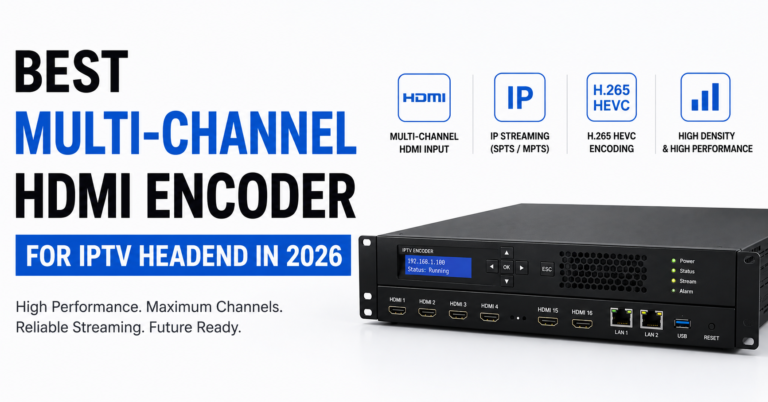
Before dismissing or recommending anything, let’s be precise about the hardware. An HD IPTV headend encoder box takes raw audio and video input, typically from HDMI, SDI, or analogue sources, and encodes it into a digital stream. That stream gets packaged using protocols like HLS or RTMP and pushed out to a distribution server.
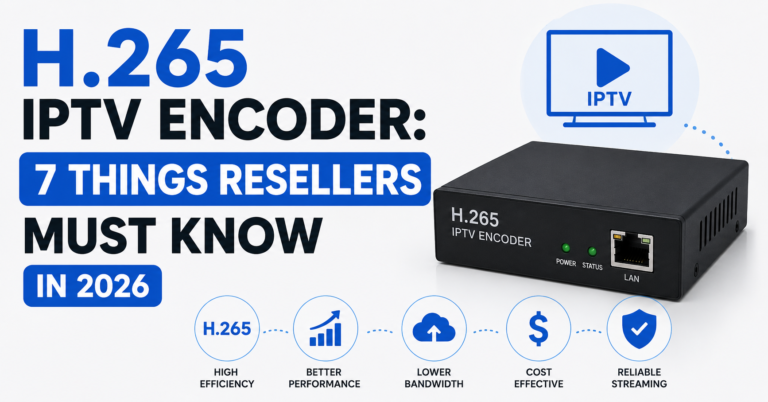
Modern units support H.265 (HEVC) compression, which cuts bandwidth roughly in half compared to H.264 while maintaining the same visual quality. That matters when you’re pushing dozens of channels simultaneously. A single H.265 IPTV HD IPTV headend encoder box might handle anywhere from 4 to 24 channels depending on the model, resolution, and bitrate settings.
Pro Tip: Encoder box manufacturers often advertise channel counts at 720p. The moment you switch to 1080p60 with H.265, that number drops sharply. Always verify specs at your target resolution.
The hardware itself sits at the very start of the IPTV delivery chain. Without it, there are no streams, at least not in a self-built headend model. But here’s the part nobody puts on the product page: the encoder is only one piece of a much larger puzzle.
The Full Infrastructure Behind a Single Encoder
Buying an HD IPTV headend encoder box and expecting to run a service is like buying a camera and expecting to run a TV network. The encoder creates streams. After that, you need middleware, a content delivery network, an EPG system, a billing layer, and enough server capacity to handle concurrent viewers without HLS latency spikes.
Here’s what the full stack actually looks like for someone building from scratch:
- Encoding hardware (the headend box itself)
- Origin server to receive and process encoded streams
- Edge CDN nodes for geographic distribution
- DNS infrastructure with load balancing
- Middleware or panel software for subscriber management
- EPG integration for channel guides
- DRM or token-based access control
- Backup uplink servers for failover
Each layer costs money, demands expertise, and introduces a failure point. A single misconfigured DNS entry can knock your entire service offline. Load balancing done poorly leads to regional buffering that no amount of encoding quality can fix.
[TABLE 1 HERE]
That table isn’t theoretical. It reflects what actually happens when someone invests in an H.265 IPTV HD IPTV headend encoder box without understanding the ecosystem it needs to survive in.
Why H.265 Encoding Changed the Hardware Game
A few years ago, H.264 was the standard. Encoder boxes were simpler, streams were fatter, and bandwidth was cheap enough that inefficiency didn’t kill you. H.265 changed the equation. The compression is better, but the processing demands are significantly higher.
An H.265 IPTV HD IPTV headend encoder box needs more powerful chipsets. That drives the price up. It also generates more heat, requires better cooling, and tends to have a shorter operational lifespan under continuous load compared to its H.264 predecessors.
Pro Tip: If you’re evaluating an HD IPTV headend encoder box, check the thermal specs. Units running 24/7 in warm environments without proper ventilation degrade faster than any spec sheet admits. Fan failure on a single unit can take out an entire channel block.
For the aspiring reseller, this creates an uncomfortable truth. The technology that makes streams look better, H.265, also makes self-encoding more expensive and more fragile. And the people searching for H.265 IPTV HD IPTV headend encoder box hardware are often the same ones with the tightest budgets.
The Real Cost Nobody Talks About: Content Acquisition
Here’s where the HD IPTV headend encoder box conversation gets uncomfortable. Having the hardware to encode means nothing without content to encode. Legal content acquisition, licensing agreements with broadcasters, sports rights holders, and production studios, costs more annually than most small operators earn in a lifetime.
The vast majority of self-encoding setups in the IPTV reseller space are pulling feeds from satellite dishes, capture cards, or upstream providers and re-encoding them. That introduces legal exposure that no amount of technical sophistication eliminates.
Panel-based reselling doesn’t make this problem disappear, but it does shift the liability upstream. The panel provider handles source acquisition, encoding, and delivery. The reseller handles sales and customer management. It’s a fundamentally different risk profile.
- Self-encoding: you own the content pipeline and every legal risk attached to it
- Panel reselling: you distribute an existing service under your brand
- Hybrid models: rare, expensive, and typically only viable above 500+ active subscribers
That third option, hybrid, is where an HD IPTV headend encoder box actually starts making commercial sense. But nobody starting out is at that scale.
DNS Poisoning, ISP Blocks, and Why Your Encoder Won’t Save You
Every reseller, whether they’re running an H.265 IPTV HD IPTV headend encoder box or buying panel credits, faces the same enemy: ISP-level blocking. In 2026, AI-driven deep packet inspection has made this worse. ISPs aren’t just blocking known domains anymore. They’re identifying streaming traffic patterns and throttling them in real time.
DNS poisoning redirects your subscribers’ requests to dead endpoints. VPN mandates frustrate casual viewers. And the reseller, sitting between the infrastructure and the customer, takes the heat from both sides.
Pro Tip: Backup uplink servers across multiple geographic regions aren’t optional anymore. If your primary delivery path gets blocked, subscribers don’t wait for you to fix it. They churn within 48 hours.
The critical point here is that owning an HD IPTV headend encoder box doesn’t protect you from any of this. ISP blocking happens at the delivery layer, not the encoding layer. You could have the most pristine H.265 encode in existence, and it means nothing if your subscriber’s ISP is killing the connection before the stream reaches their device.
Panel providers with serious infrastructure rotate IPs, maintain multiple CDN paths, and deploy anti-blocking countermeasures at scale. A solo operator with an encoder box and a single server cannot compete with that level of operational resilience.
Customer Churn Psychology: The Problem Encoding Can’t Solve
New resellers fixate on technical quality, bitrate, resolution, encoding profiles. They think if their streams look better, customers will stay. That’s only half true. Customer churn in IPTV is driven more by reliability than by picture quality.
A subscriber doesn’t leave because a channel is 720p instead of 1080p. They leave because the EPG was wrong, a channel froze during a match, or the app crashed on their device. These are middleware, CDN, and app-layer problems. An HD IPTV headend encoder box sits at the start of the chain. By the time the stream reaches the viewer, fifty other things have had a chance to go wrong.
- Encoding quality: matters, but only when everything else works
- EPG accuracy: subscribers notice wrong listings before they notice resolution
- App stability: crashes kill trust faster than buffering
- Support response time: the reseller who replies in 10 minutes keeps the subscriber; the reseller who replies tomorrow loses them
Panel credits under £50 give you access to infrastructure that took years and significant capital to build. That’s the leverage play. You’re not paying for streams, you’re paying for the entire stack that keeps those streams reaching living rooms.
Panel Credits vs a Headend Encoder Box: The Honest Maths
Let’s run the numbers without sentiment.
A mid-range H.265 IPTV HD IPTV headend encoder box capable of handling 16 channels at 1080p costs between £800 and £2,500. Add an origin server, CDN nodes, middleware licensing, and domain infrastructure, and you’re looking at £4,000 to £8,000 before a single subscriber watches a single channel. Monthly server and bandwidth costs add another £200-£500.
Panel credits from an established provider start under £50. That gets you access to thousands of channels, VOD libraries, an EPG, apps for every major platform, and, critically, infrastructure that someone else maintains. Your margin on each subscriber sits between 50% and 70% depending on your pricing.
At 100 subscribers paying £10 per month:
IPTV Panel reseller profit: approximately £700-£850/month after credit costs
Self-encoded operation profit: potentially negative for the first 6-12 months while infrastructure costs are recovered
The HD IPTV headend encoder box only becomes financially viable at scale, typically 300+ subscribers with a stable, growing base. And by the time you reach that scale through panel reselling, you’ll have the operational knowledge to decide whether self-encoding is even worth the complexity.
Load Handling: Where Encoder Box Operators Get Burned
One of the most common failure modes for self-encoding resellers is peak load. A major sporting event hits, your subscriber count is watching simultaneously, and your H.265 IPTV HD IPTV headend encoder box is pushing maximum throughput. The origin server buckles. Streams start buffering. Subscribers flood your support channels.
Load balancing across multiple edge nodes is the standard solution, but it requires infrastructure that costs money and expertise that takes time to develop. Panel providers handle this with redundant server clusters and automated failover. A solo operator with an encoder box and two rented servers doesn’t have that luxury.
Pro Tip: If you’re testing any IPTV infrastructure, whether encoder-based or panel-based, simulate peak load before you go live. Ask your panel provider how many concurrent connections your credits support. If they can’t answer clearly, find a provider who can. Check britishseller.co.uk for infrastructure that’s built to handle real-world load.
When This Hardware Actually Makes Sense
This article isn’t here to say the hardware is useless. It isn’t. An H.265 IPTV HD IPTV headend encoder box has a legitimate place in the IPTV ecosystem, just not at the starting line.
It makes sense when you’ve already built a subscriber base through panel reselling and you want to add exclusive local content that no panel carries. It makes sense when you’ve outgrown the margins of credit-based reselling and want to control more of the delivery chain. It makes sense when you have a technical team, not just a WhatsApp group.
For everyone else, and that’s the vast majority of people reading this, panel-based reselling under £50 is the entry point that actually works. No hardware. No encoding headaches. No thermal shutdowns at 2am during a cup final.
Scaling From Panels to Infrastructure: The Realistic Path
The smartest resellers treat panels as phase one. They build a customer base, learn subscriber management, figure out churn patterns, and develop support workflows. Only after that foundation is solid do they consider whether an HD IPTV headend encoder box belongs in their operation.
Phase 1: Start with panel credits, learn the market, build to 100 subscribers
Phase 2: Diversify across 2-3 panel providers for redundancy
Phase 3: Evaluate whether self-encoding specific content adds value
Phase 4: If yes, invest in an H.265 IPTV HD IPTV headend encoder box for supplementary channels only, not as a full replacement for panel streams
That phased approach protects your capital, builds real operational experience, and ensures that when you do invest in hardware, you’re making an informed decision rather than an aspirational one.
Frequently Asked Questions
What does an HD IPTV headend encoder box do?
An HD IPTV headend encoder box converts raw video and audio input into compressed digital streams using codecs like H.265 or H.264. These streams are then distributed via protocols such as HLS to end viewers. It sits at the very beginning of the delivery chain and requires additional infrastructure, servers, CDN, middleware, to function as a complete IPTV service.
How much does an H.265 IPTV HD IPTV headend encoder box cost?
Pricing varies by channel capacity and resolution support. A basic 4-channel unit might start around £300, while a professional 16-24 channel H.265 IPTV HD IPTV headend encoder box runs between £800 and £2,500. Total operational costs including servers and bandwidth push the real investment significantly higher.
Can I start an IPTV reselling business without an encoder box?
Yes, and most successful resellers do exactly that. Panel-based reselling lets you access thousands of channels, apps, and VOD content through credits that start under £50. No encoding hardware, no server management, and no upfront infrastructure investment required.
Is H.265 encoding better than H.264 for IPTV?
H.265 delivers roughly the same visual quality at half the bitrate of H.264, which reduces bandwidth costs and improves stream delivery to viewers on slower connections. However, H.265 encoding demands more processing power, generates more heat, and increases hardware costs compared to H.264 setups.
What causes buffering, encoding quality or delivery infrastructure?
Almost always delivery infrastructure. An HD IPTV headend encoder box can produce a flawless stream, but if the CDN is overloaded, DNS is misconfigured, or the ISP is throttling traffic, subscribers will still experience buffering. Reliable load balancing and backup uplink servers matter more than encoding perfection.
How do ISP blocks affect IPTV services in 2026?
AI-driven deep packet inspection now identifies streaming traffic patterns beyond simple domain blocking. DNS poisoning, traffic throttling, and real-time pattern matching mean that both encoder-based and panel-based services face disruption. Panel providers with rotating IPs and multi-path CDNs handle this more effectively than solo operators.
How many subscribers do I need before an encoder box is worth it?
Most operators find that self-encoding only becomes financially viable above 300-500 active subscribers with stable retention. Below that threshold, the infrastructure, maintenance, and licensing costs outweigh any margin improvement over panel-based reselling.
What should I look for in a panel provider as a new reseller?
Prioritise providers who can confirm concurrent connection limits, offer multiple server regions with backup uplink servers, provide responsive technical support, and supply stable apps across major platforms. Starting credits under £50 with transparent pricing is a strong indicator of a UK IPTV reseller-friendly operation.
Your Reseller Launch Checklist
Stop researching HD IPTV headend encoder box hardware until you’ve sold your first 100 subscriptions through a panel.
Secure panel credits from a provider with confirmed concurrent connection limits and multi-region backup uplink servers, britishseller.co.uk is built for exactly this.
Test your panel’s streams on at least four device types before onboarding any subscriber.
Set up a basic support workflow, even a WhatsApp Business account with saved replies beats silence.
Track churn weekly from day one. If subscribers leave within 30 days, the problem is reliability, not your pricing.
Diversify across two panel providers by month three so a single outage doesn’t flatline your revenue.
Revisit the H.265 IPTV HD IPTV headend encoder box conversation only after you have stable revenue, operational knowledge, and a genuine content gap that panels don’t fill.