Book Appointment Now
IPTV Sub-Reseller vs Reseller Explained (UK Guide 2026)
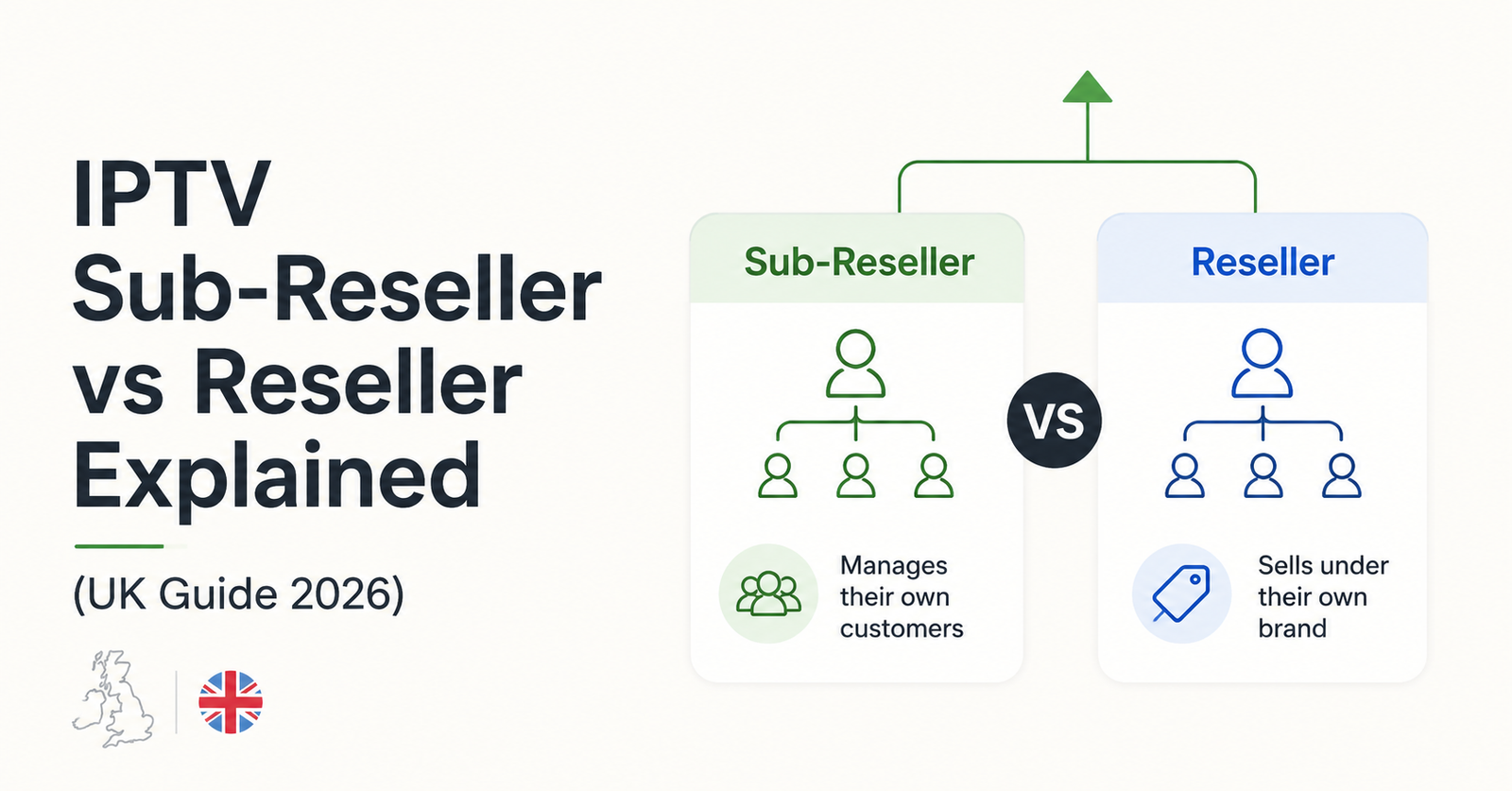
The difference between an IPTV Sub-Reseller vs Reseller comes down to where you sit in the supply chain. A reseller buys credits directly from a panel provider and sells subscriptions straight to end customers. A sub-reseller buys credits from a reseller instead, usually at a slightly higher rate, and typically operates with fewer permissions and less direct control over the underlying panel. Both can build a genuine income, but the risk, cost, and independence involved are not the same.
What an IPTV Reseller Actually Does
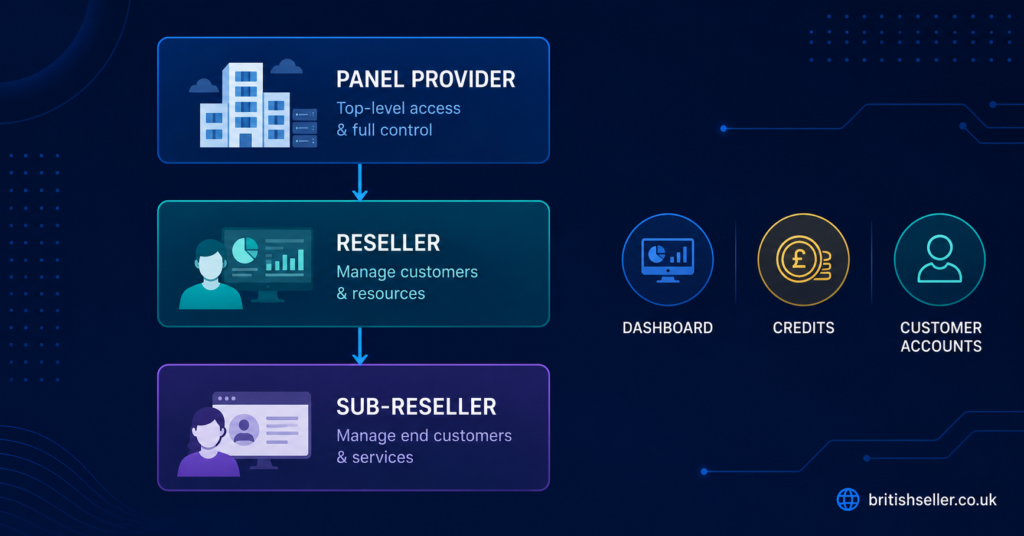
A reseller sits one level below the panel provider. They purchase a batch of credits, sometimes called lines, directly from a company like Autven, and each credit typically activates one customer subscription for a set period, often a month. From there, the reseller decides their own pricing, manages renewals, and handles customer support.
This position comes with meaningful control. Resellers usually get access to a dashboard where they can create accounts, monitor connections, apply IP locks, and track which lines are active or expired. They deal with the panel provider directly, which means fewer middlemen and generally better margins per credit, since they’re buying at the source rate rather than a marked-up rate.
The trade-off is responsibility. A reseller carries the full weight of customer service, billing disputes, and any service interruptions. If the provider has downtime, the reseller is the one fielding the complaints, not the panel operator.
What an IPTV Sub-Reseller Actually Does
A sub-reseller operates one step further down the chain. Instead of buying credits from the panel provider, they buy from an established IPTV Panel reseller, who has usually reached a credit volume threshold that unlocks the ability to onboard sub-resellers under their account. On britishseller.co.uk, for example, this threshold sits at 300 credits, after which a reseller can sell panel access downward rather than only selling subscriptions to viewers directly.
Sub-resellers typically work with a narrower set of permissions. They might be able to create and manage their own customer lines, but they won’t usually have visibility into the parent reseller’s full dashboard, pricing structure, or provider relationship. Everything routes through the reseller above them.
This model suits people who want to start small. The entry cost is lower, there’s no need to negotiate directly with a panel provider, and the parent reseller often handles onboarding questions. The downside is dependency: if the reseller above them changes terms, raises prices, or exits the business, the sub-reseller’s entire operation is affected.
Pro tip: Before committing to either role, ask the provider directly how many credits are required to unlock sub-reseller creation, and whether that threshold is a one-time purchase or an ongoing balance requirement. The answer changes how much working capital you need upfront.
Margins and Cost Structure Compared
The cost difference between the two roles is usually the first thing people notice. A reseller buying directly from the panel provider gets the lowest possible per-credit rate, since there’s no intermediary taking a cut. A sub-reseller, buying from a reseller instead of the provider, generally pays a slightly higher per-credit rate, because the reseller above them needs to build in their own margin.
That said, the sub-reseller’s cost of entry is usually much lower. Becoming a full reseller with direct panel access often requires a larger upfront credit purchase, while sub-reseller access can sometimes start with a smaller batch bought from an existing reseller.
| Factor | Reseller | Sub-Reseller |
|---|---|---|
| Credit source | Panel provider directly | An established reseller |
| Per-credit cost | Lower (source rate) | Slightly higher (marked-up rate) |
| Entry threshold | Often a larger volume commitment | Usually lower, flexible |
| Dashboard access | Full panel control | Limited, dependent on parent reseller |
Control and Independence
This is where the two roles diverge most clearly. A reseller with direct panel access typically controls their own pricing entirely, can set custom channel packages for customers, apply security features like IP locking, and manage renewals without asking anyone’s permission. They answer to the provider only for the terms of their credit purchase agreement.
A sub-reseller’s independence is bounded by what the parent reseller allows. Some resellers give sub-resellers a fairly open dashboard with real customer management tools. Others keep things tighter, requiring the sub-reseller to request account creation through them rather than doing it directly. This varies significantly between providers, so it’s worth asking specific questions before signing up as a sub-reseller under someone else’s panel.
Pro tip: Ask a prospective parent reseller exactly what your sub-reseller dashboard will let you do before you buy: create accounts unsupervised, apply custom channel packages, issue refunds, or none of the above. Get the answer in writing if possible.
Risk and Business Continuity
Every layer added to a supply chain adds a point of failure. A reseller depends on the panel provider staying operational and honouring their terms. A sub-reseller depends on both the panel provider and the reseller above them staying operational, which is one more relationship that could break down.
If a reseller decides to stop offering sub-reseller access, raises their per-credit price without warning, or simply becomes unresponsive, a sub-reseller’s business is disrupted through no fault of their own. This is a genuine structural risk that doesn’t exist in the same way for a direct reseller, whose only real dependency is the panel provider itself.
On the other hand, becoming a full reseller usually means a larger financial commitment upfront and more direct exposure if the panel provider has service issues, since there’s no one else absorbing that first wave of customer complaints.
Which Model Fits Different Goals
Someone testing the waters, with a small existing customer base of friends or family, or limited capital to commit, is often better served starting as a sub-reseller. The lower entry cost and reduced administrative overhead make it easier to learn the business without a large financial commitment.
Someone planning to build a larger operation, who wants full pricing control, direct provider access, and the option to eventually bring their own sub-resellers on board, is generally better positioned going straight to a reseller account, provided they can meet the credit volume required.
It’s also worth noting that the two aren’t mutually exclusive over time. Many people start as a sub-reseller to learn the operational side of the business, then transition into a direct reseller account once they’ve built enough customers and confidence to justify the larger credit commitment.

What to Check Before Choosing Either Role
Regardless of which side of the line you land on, a few checks apply to both:
- Payment verification. A properly run provider issues invoices or receipt codes for every transaction. Ask how you or your customers can verify a payment was recorded correctly.
- Support responsiveness. Test how quickly a provider or parent reseller responds to a query before committing credits, not after.
- Terms around credit expiry. Some providers let credits sit unused indefinitely, others don’t. Confirm this before buying in bulk.
- Clarity on service boundaries. A panel provider manages the reseller dashboard and account system. The underlying streaming infrastructure and content availability are typically separate matters, and it’s worth understanding that distinction rather than assuming one guarantees the other.
Pro tip: Whichever role you choose, keep your own invoicing and payment records from day one. It protects you in disputes with customers and gives you leverage if you ever need to query a charge with your own provider or parent reseller.
You can review available reseller plans to compare credit packages, or check the About Us page for background on how a panel provider structures its reseller and sub-reseller tiers before deciding which route suits your situation.
Frequently Asked Questions
Is a sub-reseller the same as a reseller?
No. A reseller buys credits directly from the panel provider, while a sub-reseller buys credits from an established reseller instead, usually at a slightly higher rate and with more limited dashboard access.
Do sub-resellers need to buy a large number of credits to start?
Not usually. Sub-reseller access typically has a lower entry cost than becoming a full reseller, which is part of why it appeals to people starting out.
Can a sub-reseller become a full reseller later?
In most cases, yes. Many providers allow a sub-reseller to transition into a direct reseller account once they’ve built up enough volume or capital to meet the provider’s credit threshold.
Which role earns more money?
It depends on volume and pricing, not just the role itself. Resellers generally get a lower per-credit cost, which improves margins, but sub-resellers with a strong customer base can still run a profitable business despite the slightly higher wholesale rate.
What happens if the reseller above a sub-reseller shuts down?
The sub-reseller’s supply and dashboard access are directly affected, since they depend on that reseller for credits and account management. This is one of the key risks of the sub-reseller model compared with buying directly from a provider.
Do IPTV Sub-Reseller vs Reseller have the same level of support from the panel provider?
Not always. Resellers typically deal with the provider directly, while sub-resellers often route questions through the reseller above them first.
Conclusion
The core difference between an IPTV reseller and an IPTV sub-reseller is where each one sits in the supply chain: a reseller buys direct from the panel provider with fuller control and lower per-credit costs, while a sub-reseller buys through a reseller with a lower barrier to entry but less independence and an added layer of dependency. Neither option is universally better. The right choice depends on available capital, appetite for direct provider relationships, and how much control matters to you early on. Whichever path you choose, verify payment terms, dashboard permissions, and support responsiveness before committing credits.
Subscriber Checklist
- Ask whether you’re buying from a reseller or a sub-reseller, since it can affect support response times
- Confirm how billing and renewal notices are handled before your first payment
- Save your payment receipt or invoice for every transaction
Reseller Checklist
- Confirm the credit volume required to unlock sub-reseller access with your provider
- Set clear, written permissions if you plan to bring sub-resellers under your account
- Keep your own margin calculations separate from what you charge sub-resellers versus direct customers
Sub-Reseller Checklist
- Get clarity in writing on exactly what your dashboard access allows
- Ask what happens to your accounts if your parent reseller stops trading
- Track your per-credit cost carefully, since it will be higher than a direct reseller rate